
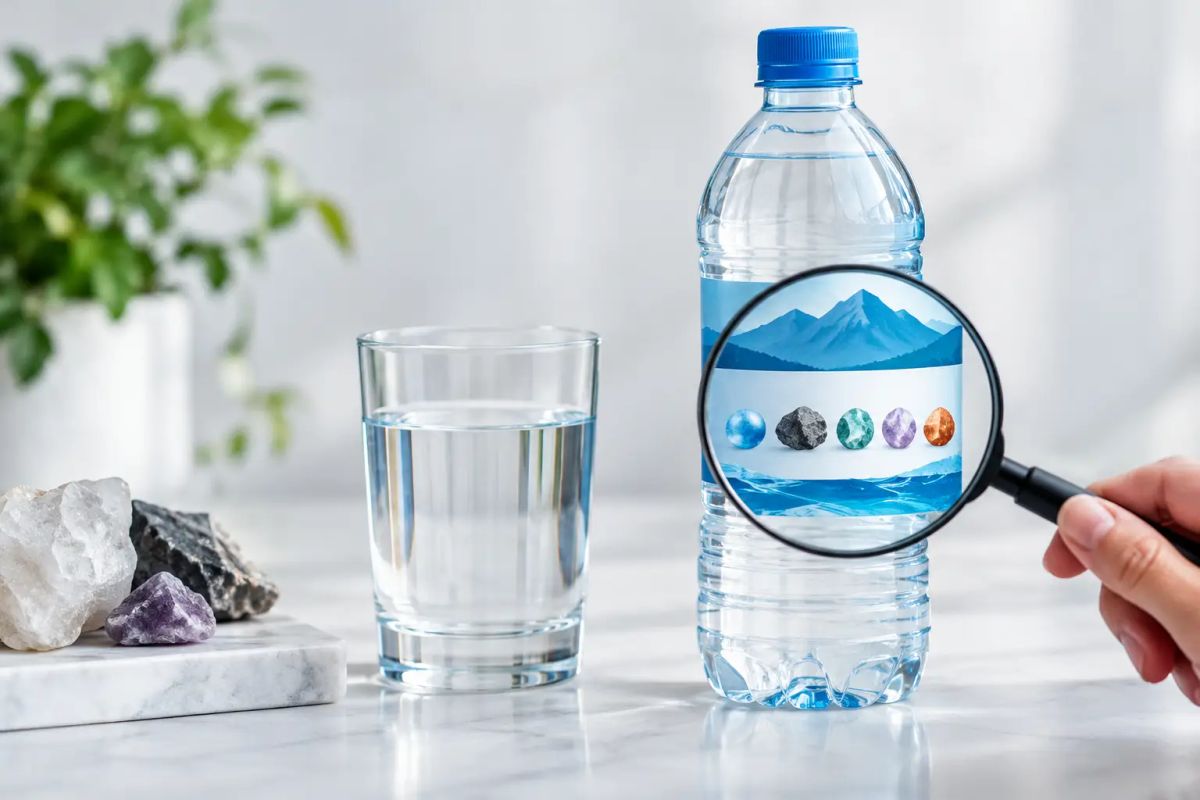
A bottle can tell a remarkable origin story in a few square inches of print. But can water bottles list minerals in a way that is useful, comparable, and complete? Yes, they can. They are not required to do so in every case, however, and the details behind a mineral panel matter as much as the numbers themselves.
For anyone who chooses water with the same care they bring to coffee, wine, or a dining-room menu, a mineral label is not just technical information. It is a first introduction to the water's structure, source, and sensory character. There is a world inside every bottle. The challenge is learning which clues deserve your attention.
Can water bottles list minerals under U.S. labeling rules?
Bottled-water producers may list mineral composition on a label, often as a mineral analysis or typical analysis. You may see calcium, magnesium, sodium, potassium, bicarbonate, sulfate, chloride, silica, or nitrate, usually expressed in milligrams per liter, written as mg/L.
A mineral analysis is common among spring, mineral, and premium imported waters, but it is not universal. Some bottles lead with a clean, minimal design and offer only the legally required information. Others publish a detailed panel because their mineral composition is central to the product's identity. Neither approach automatically signals better water. It simply gives the shopper a different amount of information at the shelf.
Labeling rules can also vary with the water's classification, source, production method, and market. A label may state that minerals are naturally occurring, indicate a source, or identify added ingredients when applicable. The practical point is straightforward: do not assume that a bottle without a mineral panel contains no minerals. It may simply mean the producer has not printed a full analysis on that package.
What a mineral panel actually tells you
Minerals are dissolved substances acquired as water moves through rock, soil, and underground aquifers, or present through a producer's specified process. In a naturally mineralized water, composition reflects geology and time. A volcanic landscape, limestone formation, or deep protected aquifer can leave a distinctly different signature.
The figures on a label are usually concentrations, not a tasting score. Still, they can offer a useful preview of how a water may feel on the palate.
- Calcium can contribute a rounded, softly chalky or structured impression.
- Magnesium may bring a firmer, sometimes slightly bitter mineral edge at higher concentrations.
- Sodium can make a water seem smoother, broader, or subtly savory, depending on the overall balance.
- Bicarbonate often gives water a gentle, buffering character and can make the finish feel more substantial.
- Sulfate and chloride can add dryness, salinity, or a crisp mineral lift.
- Silica is frequently associated with a smooth, silky texture, though texture always comes from the complete composition rather than one number alone.
The language here matters. A panel can suggest sensory direction, but it cannot fully replace tasting. Two waters with similar calcium levels can drink differently because magnesium, bicarbonate, sodium, carbon dioxide, temperature, and total mineral balance all shape the experience.
Read the numbers in context, not in isolation
The most useful mineral labels make room for context. Start by looking at the unit. In most cases, mg/L means milligrams of a mineral in one liter of water. It is a concentration, which makes it more useful for comparison than a vague claim such as “mineral-rich.”
Then look for TDS, or total dissolved solids. TDS is a broad measure of dissolved material in the water, often also reported in mg/L. A low-TDS water may taste light, delicate, and quick on the finish. A higher-TDS water may seem denser, more textured, and more persistent. But TDS does not identify which minerals are present, and it does not establish quality on its own. It is the total, not the recipe.
pH can appear on some labels as well. It describes acidity or alkalinity on a scale, but it is only one measurement. pH does not tell you how mineralized a water is, where it came from, or how it will taste. Treat it as one line in a larger profile, not the headline.
A strong label also identifies whether results are “typical,” “average,” or from a particular analysis. Natural-source water can vary modestly over time. Seasonal conditions, source management, and bottling practices may influence a published analysis. That is not necessarily a flaw. It is a reminder that natural water is an agricultural and geological product, not a flavor engineered to be identical in every setting.
Why some bottles do not list minerals
There are several reasonable explanations for a missing mineral panel. Space is one. A small-format bottle has limited room after branding, mandated information, and recycling details. Brand positioning is another. Some producers prioritize simplicity over technical storytelling.
The source category may also shape what the producer chooses to emphasize. Water drawn from a named spring or mineral source often has a compelling origin narrative and may feature its analysis prominently. Other bottled waters may focus on purity, processing, or convenience rather than a geological profile.
What you should not do is fill in the blanks with assumptions. “No minerals listed” does not mean “zero minerals.” “High pH” does not mean “high mineral content.” “Natural” does not explain a specific composition. Good water literacy begins where shortcut claims end.
A better way to compare two bottles
When deciding between bottles, compare like with like. Begin with source origin: is the water described as spring water, mineral water, or another category? Next, compare TDS if both brands publish it. Then scan the principal minerals rather than fixating on a single value.
Imagine one water with moderate calcium and bicarbonate and another with low overall TDS and very little listed mineral content. The first may be a natural fit when you want a more present, structured pour with a meal. The second may appeal when you prefer a quieter profile that stays in the background. These are taste preferences, not rankings.
Temperature and carbonation change the picture, too. Chilling can mute aroma and soften the perception of mineral intensity. Fine bubbles can sharpen the finish, while larger bubbles can make a water feel more dramatic. A still water and a sparkling water from the same source may therefore offer related but different experiences.
For food, think in terms of contrast and harmony. A delicate water can preserve the nuance of raw seafood, tea, or a subtle white wine. A more mineral-forward sparkling water can stand beside rich cheese, cured foods, or a boldly seasoned dish. The goal is not a universal pairing rule. It is attention.
Let the bottle become a tasting note
The most compelling water labels connect data to place. A mineral panel tells you what is dissolved in the water. The source statement suggests where that signature began. Together, they turn an ordinary purchase into something more considered.
If the fine print is hard to read or the label leaves questions unanswered, Water Sommelier offers a simpler way to explore the bottle in your hand. Point your phone camera at a bottle to identify the product and view educational details on mineral composition, pH, TDS, and source origin when available. Point. Shoot. Know.
Still, the final authority is your own palate. Notice whether the water feels weightless or structured, crisp or creamy, fleeting or long on the finish. Read the numbers, respect the source, and give yourself permission to have a preference. The next bottle may be more than water. It may be a place, expressed in a glass.
Scan any bottle. Discover its minerals, origin, and character. Get the Water Sommelier app.