
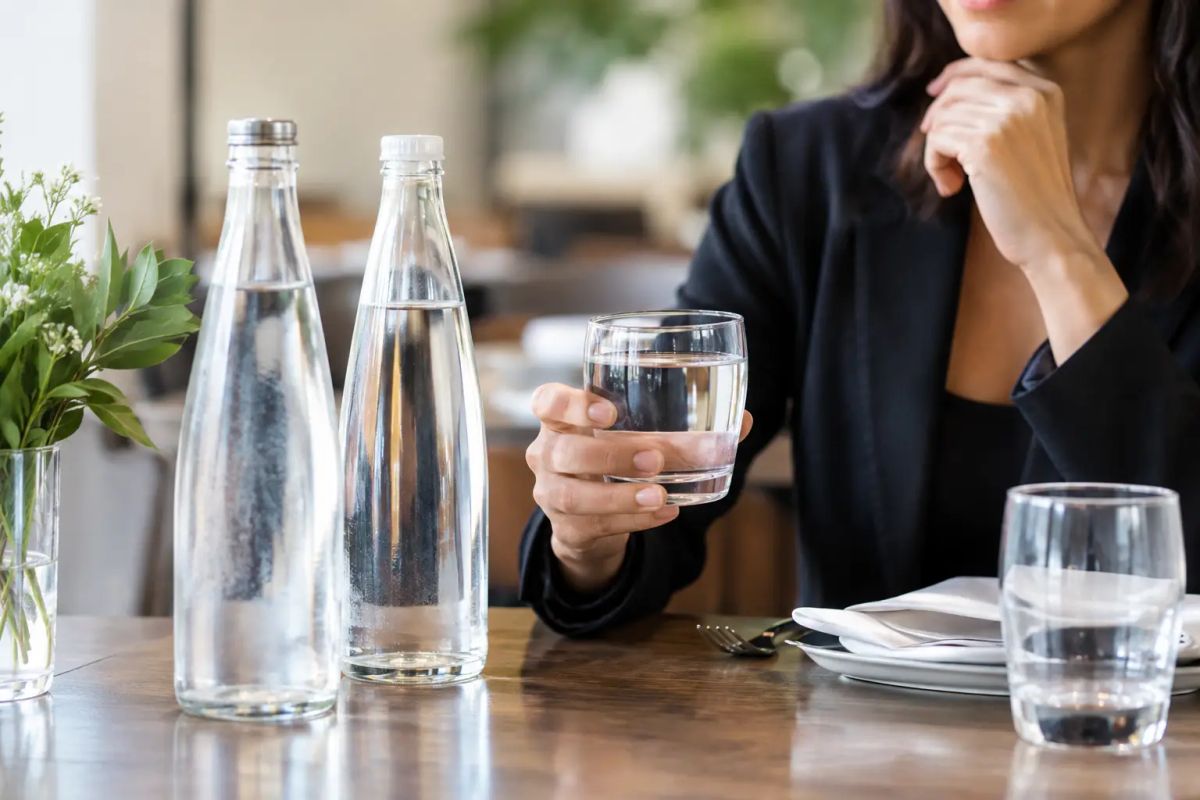
A water list can be one of the quietest signals that a restaurant takes the table seriously. Yet when the server asks, “Still or sparkling?” most guests make a quick choice and move on. Learning how to choose restaurant water turns that familiar question into a more considered part of the meal - one shaped by source, mineral character, temperature, texture, and the food in front of you.
There is a world inside every bottle. A water may be soft and almost weightless, bright with carbonation, lightly saline, creamy in texture, or structured by a pronounced mineral finish. The right choice does not need to be the rarest bottle or the highest price on the list. It needs to suit the occasion.
Start With the Restaurant’s Water Program
First, notice what the restaurant is offering. Some dining rooms treat water as a thoughtful beverage category, with a concise list organized by still and sparkling styles, source origin, or mineral profile. Others simply present one house option alongside a familiar sparkling bottle. Both approaches are valid, but the level of choice affects how much consideration is useful.
If the list includes descriptions, read them as you would a wine list. Terms such as low mineral, naturally sparkling, volcanic source, spring water, or high bicarbonate are not decoration. They suggest how the water may feel on the palate and how assertively it may appear alongside food.
Do not assume that imported automatically means better, or that a dramatic bottle guarantees a more satisfying experience. Origin offers context, not a score. Water drawn from a protected spring, deep aquifer, glacier-fed source, or volcanic region can each have a distinct identity, but the best selection remains the one that complements your meal and your own taste.
How to Choose Restaurant Water by Meal Style
A useful starting point is to consider the structure of the food. Delicate dishes usually leave more room for subtle water, while richer, saltier, or more intensely seasoned plates can accommodate greater mineral presence or firmer effervescence.
For raw fish, oysters, crudo, fresh salads, and lightly dressed vegetables, choose a still water with a clean, restrained profile or a sparkling water with fine, gentle bubbles. A water that is heavily mineralized or aggressively carbonated can dominate quiet flavors and alter the sensation of a precise dish.
With fried dishes, charcuterie, roasted meats, pizza, and foods built around fat or salt, sparkling water often feels especially at home. Its carbonation brings lift to the table and offers contrast between bites. This is a matter of sensory balance, not a rule. If you find bubbles distracting, a composed still water remains an excellent choice.
For tasting menus, still water is often the more adaptable companion, particularly when courses move from delicate to savory to sweet. It stays in the background and lets the chef’s progression lead. If you prefer sparkling, ask for it to be poured in smaller intervals so it remains lively rather than sitting open through several courses.
Spicy food calls for a personal decision. Some diners enjoy the crisp interruption of sparkling water; others find carbonation amplifies the intensity of chile. A low-mineral still water is often the quieter option when you want the dish itself to remain the focus.
Still or Sparkling Is Only the First Question
Still water is not a single style. A very low-mineral still water can seem light, neutral, and quick to disappear. One with more calcium, magnesium, or bicarbonate may have a rounder texture, greater weight, and a longer finish. Neither is inherently superior. Think of the difference between linen and velvet: each has a place, but they do not create the same experience.
Sparkling water varies just as widely. Look beyond the presence of bubbles and consider their character. Fine, persistent effervescence can feel elegant and integrated. Larger, sharper bubbles can feel more energetic and direct. Naturally occurring carbonation and added carbonation may also create different impressions at the table, though preference matters more than provenance alone.
If you are sharing a bottle, sparkling can make the choice feel festive and communal. For a business lunch, an extended dinner, or a meal where you expect to taste several wines, still water may offer a calmer rhythm. You can also order both. Many tables do, especially when guests have different preferences or the menu ranges across contrasting courses.
Read Mineral Information as Flavor Information
Mineral data can seem technical, but it becomes useful once you see it as a guide to taste. Calcium and magnesium often contribute to a water’s sense of structure. Sodium may register as a gentle salinity in certain waters. Bicarbonate can shape softness and mouthfeel. Total dissolved solids, often shown as TDS, gives a broad indication of the minerals dissolved in water.
A lower TDS reading often corresponds with a lighter, more delicate impression. Higher TDS can signal a fuller, more pronounced mineral character. It is not a ranking system. A low-TDS water may be ideal beside a refined seafood course, while a mineral-rich water may be compelling with a deeply savory meal.
pH is another figure that appears on some labels and menus. It describes acidity or alkalinity, but it does not tell the whole sensory story and should not be treated as a shortcut to quality. Source, mineral composition, carbonation, serving temperature, and glassware all influence what you notice in the glass.
When a bottle catches your attention, Water Sommelier can help you examine its listed mineral composition, pH, TDS, and source origin by using your phone camera to identify the product. Point. Shoot. Know. It is a simple way to turn a compelling restaurant bottle into a more informed tasting experience.
Ask the Server a Better Question
You do not need to speak like a sommelier to order thoughtfully. Instead of asking, “What is your best water?” try a question that gives the server something useful to work with: “Which still water is lightest?” “Which sparkling water has finer bubbles?” or “Is there a water you recommend with the seafood course?”
A strong service team will either know the answer or happily find it. If the restaurant does not have detailed information, keep the decision simple. Choose still if you want the water to recede; choose sparkling if you want contrast and refreshment between bites. The pleasure is in paying attention, not in performing expertise.
Temperature is worth considering, too. Water served ice-cold can lose aroma and nuance, while water served too warm can feel flat, especially when sparkling. A chilled but not numbing temperature usually allows both texture and mineral character to emerge. If your sparkling water arrives with little energy, it is reasonable to ask for a fresh bottle.
Consider Price, Bottle Size, and the Pace of the Table
Restaurant water can be priced like a small luxury, and it is fair to decide whether the experience merits it. A distinctive source water in elegant glassware may add pleasure to a celebratory dinner. At a casual lunch, the simplest available option may be exactly right. Intention is not the same as extravagance.
Bottle size matters as well. A large bottle is efficient for a table of four, but sparkling water loses some of its sparkle if the meal moves slowly. For two diners over a long dinner, a smaller sparkling bottle paired with a larger still bottle can be a better rhythm than one oversized bottle of either.
If wine is part of the meal, water should support rather than compete with it. Choose a relatively neutral still water when you want the wine’s aroma and finish to remain clear. Sparkling water can be a bright aperitif choice before wine arrives, or a useful counterpoint during a rich course. The balance depends on the wine, the food, and how much attention you want water to command.
Give Water a Moment of Attention
When the bottle is poured, take a small sip before the food arrives. Notice the first impression: is it crisp, round, saline, chalky, soft, or effervescent? Take another sip after a bite. The interaction may be subtle, but that subtlety is the point. Great dining is made of small decisions that make the whole table feel more complete.
The next time a server asks still or sparkling, pause for one beat. Consider the menu, the mood, and the glass waiting to be filled. A thoughtful choice of restaurant water is not about getting the answer right. It is about discovering that even the most familiar part of the meal can have character.
Scan any bottle. Discover its minerals, origin, and character. Get the Water Sommelier app.