
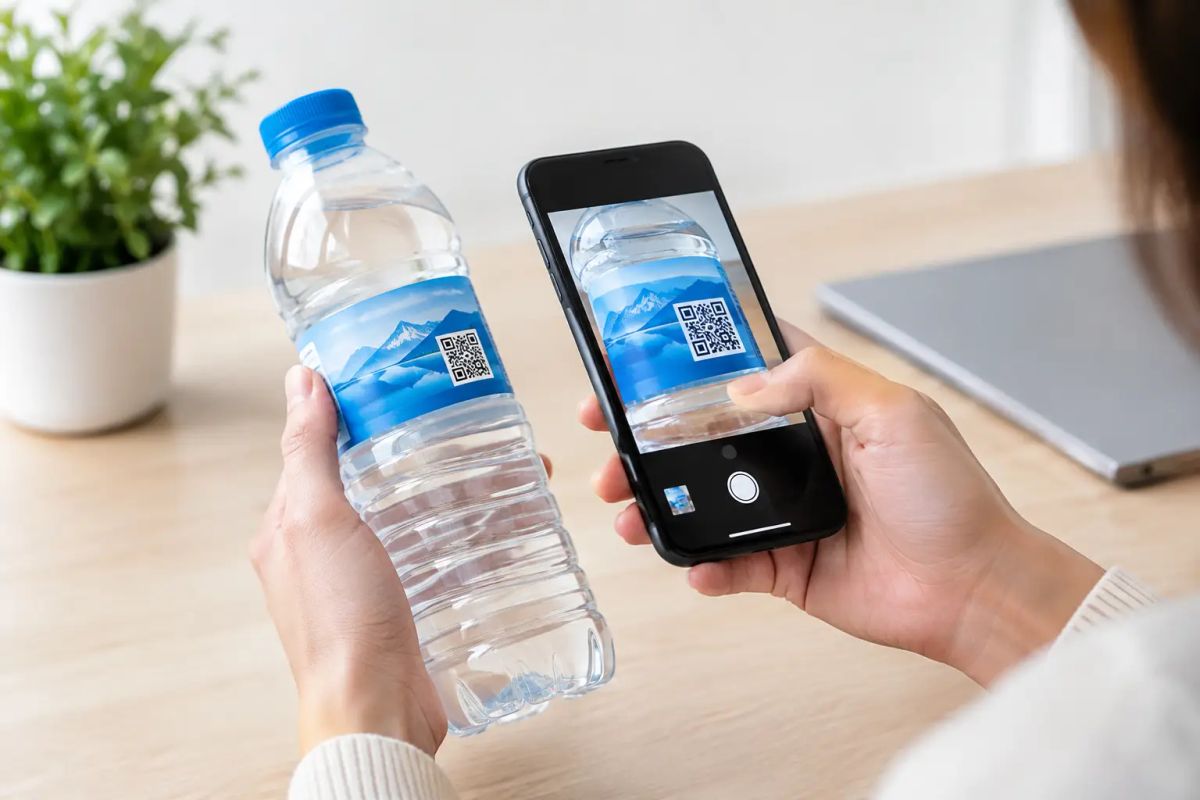
A bottle may look simple: clear glass or plastic, a clean label, a familiar name. Yet there is a world inside every bottle. When you scan water bottle labels, you move beyond branding and begin to see water through its origin, mineral profile, and character.
That shift changes the shopping experience. Instead of choosing by price, packaging, or habit alone, you can recognize the details that make one water crisp and light, another structured and mineral-forward, and another quietly soft. The label is a starting point. Knowing how to interpret it is where the pleasure begins.
Why Scan Water Bottle Labels?
Bottled-water labels often contain useful information, but it is not always presented in a way that invites comparison. A source statement may sit beside a small mineral panel. pH may be shown prominently on one bottle and omitted on another. Some brands list a detailed analysis; others offer only a few figures or direct you elsewhere.
Scanning helps turn that fragmented information into something more legible. With a water-label scanner, the goal is not to make a verdict about whether one bottle is universally “better.” Water preference is personal, and context matters. The useful question is more precise: what is this water, where does it come from, and what does its composition suggest about its style?
For a dinner host selecting water for the table, a food writer researching a producer, or a curious shopper standing in a market aisle, those are worthwhile distinctions.
What to Look for When You Scan a Water Bottle Label
A well-read water label tells a story in several layers. Start with source origin, then look at mineral composition and the measurements that provide context for the overall profile.
Source origin: the beginning of the story
Look for language such as spring, mineral water, artesian water, or naturally sourced water, along with the named place of origin. The source is more than a line of copy. It provides context for the water's journey through rock, aquifer, or spring system before bottling.
Origin does not automatically predict flavor, but it offers a useful frame. Water from different geological settings can carry distinct mineral signatures. Think of it as provenance in wine or coffee: a meaningful clue, not the entire experience.
Pay attention to specificity. A named spring, region, or protected source can tell you more than broad, atmospheric language. If the label gives a source location but little mineral information, you still have a starting point for understanding the bottle in your hand.
Mineral composition: the architecture of taste
The most revealing section is often the mineral analysis. Calcium, magnesium, sodium, bicarbonate, sulfate, chloride, and silica may appear in milligrams per liter, written as mg/L. These are naturally occurring dissolved minerals that contribute to a water's structure and sensory impression.
Calcium and magnesium are commonly associated with a firmer, more substantial palate. Bicarbonate can lend a rounded, gentle character, particularly when present alongside calcium and magnesium. Sodium may bring a subtle savory impression, while sulfate can read as dry or brisk. Silica is often found in waters with a notably smooth texture.
These are tasting cues, not fixed rules. A mineral profile works as an ensemble. A water with modest sodium may still taste delicate if its total mineral content is low, while a similarly low-sodium water can feel more layered because of calcium, magnesium, or bicarbonate.
TDS: a useful measure of intensity
TDS means total dissolved solids. On bottled water, it generally describes the total amount of dissolved mineral material in the water, measured in mg/L or parts per million.
As a broad sensory guide, lower-TDS waters often feel lighter and more neutral. Higher-TDS waters tend to have greater mineral presence and a longer finish. Neither style is inherently superior. A low-mineral water can be wonderfully clean beside delicate food, while a more mineral-rich bottle may hold its own with salty snacks, aged cheese, or a rich meal.
TDS is a headline, not a complete tasting note. Two waters with similar TDS can taste markedly different because their minerals are arranged differently. Use the number to establish intensity, then look at the individual minerals for detail.
pH: context, not a quality score
pH describes whether water is more acidic or more alkaline on a scale that ranges from 0 to 14. A value around 7 is neutral. But pH alone cannot tell you everything about a water's taste, source, or mineral character.
It is tempting to treat pH as a ranking system because it is a bold, familiar number. Resist that shortcut. A slightly higher or lower pH does not define a water's quality. Read it alongside the source and mineral analysis, where the more distinctive story usually lives.
How to Scan Water Bottle Labels With an App
The practical value of scanning is speed. At the shelf, you should not need to decode tiny type, search for a source statement, and compare mineral panels from memory. Point. Shoot. Know.
Water Sommelier uses your phone camera to identify a bottled-water product and present educational information about its mineral composition, including calcium, magnesium, sodium, and bicarbonate, as well as pH, TDS, and source origin when available. It brings the details together so you can approach a bottle with greater clarity.
For the cleanest scan, place the bottle against a contrasting background and make sure the front label is well lit. Hold the camera steady and keep glare from overhead lights off the label where possible. A bottle that is heavily curved, covered in condensation, or photographed in dim light may be harder to identify. If the first scan does not register, wipe the bottle and try again from a slightly different angle.
A scanner is especially helpful when labels prioritize design over data. It also gives you a more consistent way to compare bottles from different producers. Rather than searching for the same information in different places, you can focus on the differences that matter to your preference: a lighter profile versus a fuller one, a neutral finish versus a pronounced mineral signature, a familiar source versus a new place to explore.
Turn Numbers Into a Better Tasting Ritual
Reading a label is most rewarding when it leads back to the glass. Taste water at a cool, not ice-cold, temperature if you want to notice more of its character. Extremely cold water mutes subtle aromas and texture, making distinct profiles harder to perceive.
Pour two different waters into identical glasses and taste them side by side. Take a small sip, let it rest briefly, and notice its entry, mid-palate, and finish. Does it disappear quickly or linger? Does it feel lean, creamy, chalky, crisp, rounded, or gently saline? The language need not be perfect. The point is attention.
Food can make those distinctions more vivid. A light, low-mineral water may feel at home beside fresh fruit or raw seafood. A water with more body and bicarbonate may suit a cheese board or roasted dishes. Sparkling water adds another consideration: carbonation changes texture and can sharpen the overall impression. These are invitations to experiment, not rigid pairing laws.
The Limits of the Label
A label and an app profile are valuable tools, but they do not replace your own perception. Mineral analyses may be reported differently across producers, and natural waters can show modest variation over time. Not every bottle lists every mineral, and not every brand presents information in the same format.
That is why it helps to avoid single-number thinking. Do not choose solely by pH, TDS, or one mineral. Read the profile as a whole, then taste with curiosity. The best bottle for a quiet desk lunch may not be the one you pour with dinner, and the water you return to most often may simply be the one whose character you enjoy.
The next time a bottle catches your eye, pause before you twist the cap. Scan the label, consider the source, and let the minerals offer their introduction. A more intentional glass begins with a closer look.
Scan any bottle. Discover its minerals, origin, and character. Get the Water Sommelier app.