
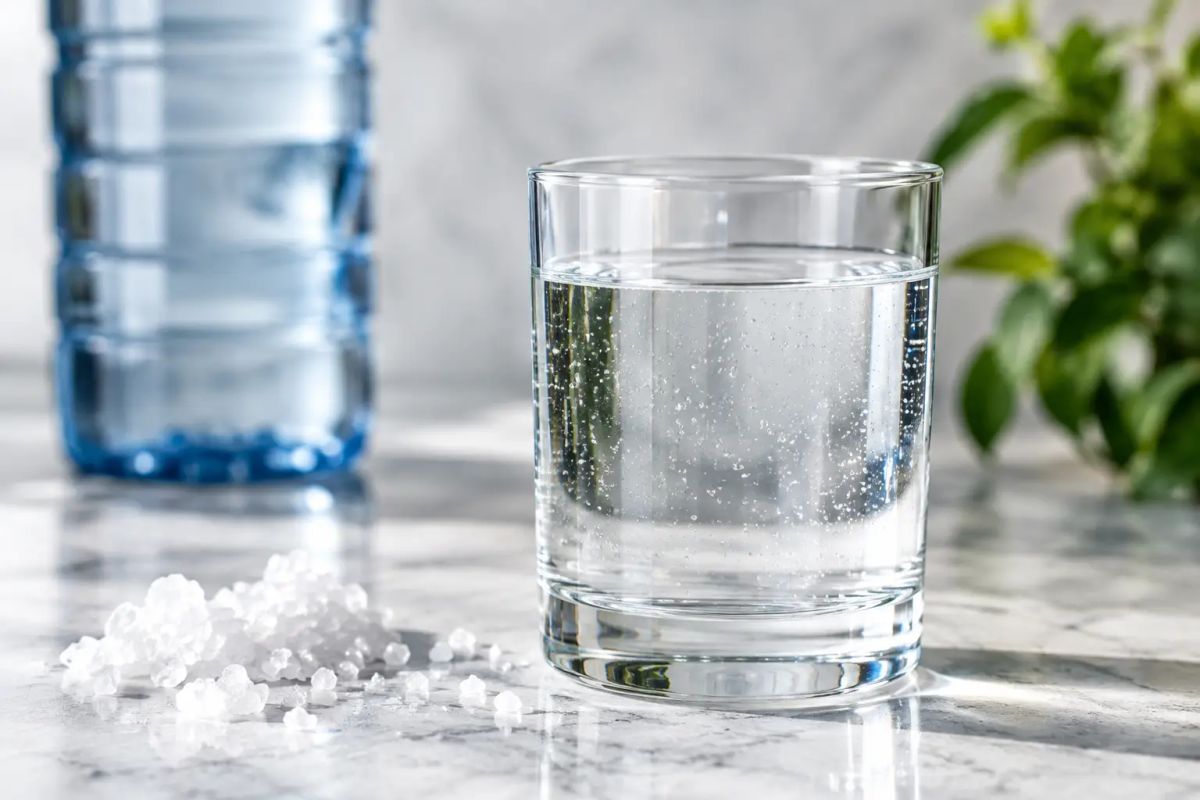
A bottle can look perfectly clear and still taste distinctly saline. If you have wondered, why does mineral water taste salty, the answer is not usually table salt in the familiar culinary sense. It is the character of the source: dissolved minerals gathered as water moves slowly through rock, sediment, and underground formations.
That flavor can be subtle, like a clean ocean-air finish, or unmistakable, with a savory, briny edge that lingers after the sip. In mineral water, taste is geology made liquid. There is a world inside every bottle.
Why does mineral water taste salty?
The most direct reason is sodium. Sodium is a naturally occurring mineral that can dissolve into groundwater as it passes through mineral-rich layers of earth. When its level is high enough, the tongue begins to register a salty note.
But sodium rarely works alone. Chloride can reinforce a saline impression, while bicarbonate can make the water feel rounder, softer, or faintly alkaline. Sulfate may add a dry, mineral-forward edge. The result is not always the sharp saltiness of seawater. More often, it is a structured savoriness - a taste that gives the water weight and presence.
A source’s geology determines the composition. Water traveling through limestone may collect calcium and bicarbonate. Water moving through volcanic or deep aquifer systems may emerge with a different balance of sodium, silica, magnesium, sulfate, or other dissolved constituents. Two waters with similar sodium numbers can even taste different because their surrounding mineral profile changes how that sodium presents on the palate.
Sodium is the main clue, not the whole story
When a mineral water tastes salty, start with the sodium entry on its label. This is generally the most useful clue, particularly when compared with a very low-sodium still water. Yet a label is a map, not a tasting note.
Calcium often contributes a firm, sometimes chalky structure. Magnesium can read as dry or slightly bitter. Bicarbonate can soften acidity and create a smooth, almost creamy texture. Chloride can sharpen salinity. Together, these elements make up a water’s sensory architecture.
Think of the difference between a pinch of salt on its own and salt folded into a finished dish. The same principle applies here. A mineral water with moderate sodium and ample bicarbonate may feel gently savory and polished. Another with sodium and chloride at more prominent levels may taste cleaner, crisper, and more overtly saline.
This is why total dissolved solids, or TDS, should not be mistaken for a saltiness score. TDS measures the overall amount of dissolved material, not the exact combination. A water can have high TDS because it contains calcium and bicarbonate, yet taste more stony than salty. Another may have lower overall TDS but a recognizable saline finish because sodium and chloride play a larger role in its particular composition.
Why carbonation can make salinity more noticeable
Sparkling mineral water often makes people notice mineral character faster. Carbonation adds lift, texture, and a gentle bite. It can brighten salty or savory notes in much the same way bubbles make flavors feel more vivid in a beverage.
That does not mean the carbonation created the saltiness. In naturally carbonated water, or water carbonated before bottling, bubbles simply change the way the palate receives what is already there. A saline mineral profile that feels quiet in a still version may seem more energetic once sparkling.
Temperature matters, too. Very cold water can mute aroma and soften flavor detail. As the glass warms slightly, mineral notes become easier to identify. For a clearer read, pour the water into a stemmed glass or simple tumbler, let the most vigorous bubbles settle, and taste it alongside a familiar low-mineral water. The contrast reveals far more than a label alone.
Natural mineral content versus added sodium
Not every bottled water follows the same path from source to shelf. A natural mineral water typically reflects the mineral composition of its protected underground source, with the finished product retaining the source’s distinctive profile. Other bottled waters may be purified, altered, or formulated differently depending on the category and producer.
The label is the practical place to begin. Look for the source description and the mineral analysis, often listed in milligrams per liter. Sodium, calcium, magnesium, bicarbonate, sulfate, chloride, and TDS are the entries most likely to explain what you taste.
A salty taste does not automatically indicate that anything is wrong with the water. It may simply be a defining expression of the source. Still, flavor is personal. Some people enjoy a pronounced saline edge because it feels gastronomic and refreshing at the table. Others prefer a quieter profile with lower mineral intensity. Neither preference is more sophisticated. The pleasure lies in recognizing the difference and choosing intentionally.
How to read a mineral water label for taste
A label becomes more useful when you read it as a forecast of texture and flavor rather than a technical checklist. Start with sodium if saltiness is your question. Then look at chloride and bicarbonate for context.
A water with low sodium, modest calcium, and low TDS will often taste light and neutral. Increase calcium and magnesium, and the water may become firmer, drier, or more mineral-driven. Raise sodium and chloride, and the profile may shift toward savory or saline. Higher bicarbonate can bring breadth and a smoother finish, though the final effect always depends on the complete balance.
The stated pH can offer another piece of context, but it is not a flavor verdict. pH describes acidity or alkalinity at the time of measurement; it does not tell you precisely how salty, soft, sparkling, or complex a water will taste. The mineral panel and your palate should carry more weight.
For a faster way to translate the label, Water Sommelier lets you point your phone camera at a bottle to identify the product and view available information about mineral composition, pH, TDS, and source origin. Point. Shoot. Know. It is a useful starting point when a label’s small print leaves you wondering why one water tastes crisp and saline while another feels velvety and calm.
A saline water’s place at the table
A mineral water with a savory profile can be an engaging dining companion. Its distinctiveness can stand up to foods that might make a very light water disappear: briny seafood, aged cheeses, roasted vegetables, cured preparations, or dishes with citrus and herbs. The aim is not to force a pairing rule. It is to notice whether the water clears the palate, echoes a salty element in the food, or competes too strongly.
With delicate dishes, a strongly saline water can sometimes take over. In those moments, a lower-mineral still water may give the food more room. With richer or more intensely seasoned plates, the same saline water may feel beautifully composed. Context changes the experience.
The glass itself also changes perception. Serve sparkling mineral water in a glass with enough room for aroma and bubbles rather than drinking only from the bottle. Taste it once before the meal, then again alongside food. You may notice that a flavor first perceived as salty becomes more like minerality, texture, or a long, clean finish.
When salty becomes too salty
There is a difference between a purposeful mineral signature and an unpleasant taste. If a newly opened bottle seems unusually harsh, metallic, stale, or different from prior bottles of the same product, do not assume it is simply part of the style. Check the best-by date, storage conditions, seal, and label. Heat, age, and packaging can affect a beverage’s sensory experience.
For ordinary comparison, however, the best approach is curiosity rather than suspicion. Pour two different mineral waters side by side. Notice the first impression, the mid-palate texture, and the finish. One may feel featherlight; another may feel almost brothy in its mineral depth. A third may sparkle with saline precision.
Saltiness is not a flaw in mineral water. It is one of the clearest signatures a source can offer - an invitation to taste the landscape, one measured sip at a time.
Scan any bottle. Discover its minerals, origin, and character. Get the Water Sommelier app.