
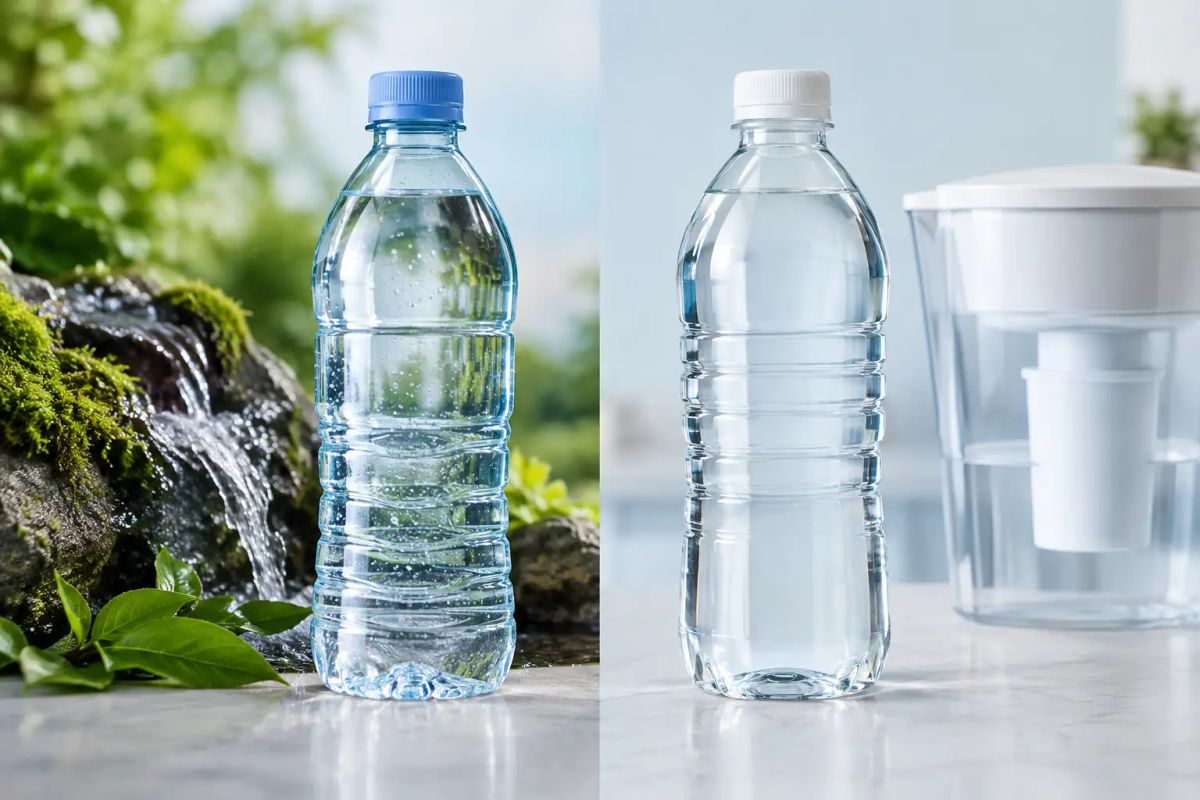
A bottle can look pristine, taste clean, and still tell two very different stories. In the conversation around spring versus purified water, the central distinction is not which one is universally better. It is where the water begins, what happens before bottling, and what remains in the glass.
For anyone who chooses water with the same attention given to coffee beans, olive oil, or wine, those details matter. There is a world inside every bottle: geology, processing, mineral balance, and a particular sensory profile waiting to be noticed.
Spring Versus Purified: The Essential Difference
Spring water is collected from an underground source where water flows naturally to the surface or is drawn from a borehole connected to that source. Its defining character is origin. As water moves through rock and soil, it may pick up naturally occurring dissolved minerals, including calcium, magnesium, sodium, and bicarbonate.
Purified water is defined primarily by process. It starts with a water source and then undergoes treatment designed to remove dissolved solids and other substances. Common purification methods include reverse osmosis, distillation, deionization, or a combination of processes. The final product may be very low in dissolved minerals, though some producers add minerals back afterward for flavor or consistency.
That distinction changes the question to ask at the shelf. With spring water, ask: What is the source, and what does its mineral profile taste like? With purified water, ask: How was it treated, and were minerals added after purification?
Neither category is a shortcut to quality. A carefully sourced spring water can be expressive and distinctive. A well-made purified water can be remarkably clean, neutral, and dependable. The right choice depends on the experience you want from the bottle.
Origin Creates Character
Spring water carries the signature of a place. Its source might be a protected aquifer, a mountain spring, or an underground formation shaped over centuries. The label may name a spring, a region, or a specific source. This information is more than scenery. It provides context for the water's composition and character.
Mineral content varies dramatically from one spring to another. One may feel light and delicate, while another feels rounded, chalky, crisp, or quietly saline. A water with more bicarbonate can present a soft, buffering quality. One with a notable calcium and magnesium presence may seem structured and substantial on the palate. Sodium, when present at higher levels, can bring a faint savory edge.
Purified water generally aims for a different expression. By removing much of the starting water's dissolved material, purification reduces the influence of its original source. This can create a clean, restrained profile with less variation from bottle to bottle. For people who prefer a neutral taste, that consistency is often the point.
Still, purified does not always mean flavorless. Some purified waters are formulated with added minerals, which can give the water a subtle finish and a more composed mouthfeel. The label is the place to look for that distinction.
Source labels deserve a closer read
Words such as “spring,” “purified,” “mineral,” and “artesian” are not interchangeable descriptions. They point to different source or processing stories. A spring designation speaks to origin. Purified speaks to treatment. Mineral water typically has a stable mineral composition from its source, while artesian water comes from a confined aquifer.
The front label may communicate mood. The smaller print often communicates the useful details. Look for the named source, treatment language, and mineral analysis when available.
Minerals, TDS, and What They Actually Tell You
The most useful way to compare bottled water is not to chase one number. It is to read a few details together.
TDS, or total dissolved solids, measures the combined amount of dissolved material in water, usually expressed in milligrams per liter. In many cases, spring water has a higher TDS than purified water because it retains more minerals from its journey through the ground. Purified water treated through reverse osmosis or distillation often has a very low TDS unless minerals are added later.
But TDS is a broad measure, not a flavor score. Two waters with similar TDS can taste quite different because the mineral mix is different. Calcium, magnesium, bicarbonate, sodium, sulfate, and silica all contribute their own character. Think of TDS as the total volume of an orchestra, not the identity of every instrument.
pH is another data point that benefits from context. It describes acidity or alkalinity on a scale, but it does not explain mineral composition by itself, nor does it predict taste with precision. A water's full profile, including its source and mineral balance, tells a more complete story.
For a more informed comparison, read the available analysis as a set: calcium, magnesium, sodium, bicarbonate, TDS, pH, and source. You do not need to memorize ideal numbers. You only need to notice patterns and connect them to what you enjoy tasting.
How Spring and Purified Water Taste
Taste is where the distinction becomes immediate. Spring water often has a recognizable sense of texture. Depending on its composition, it may feel silky, creamy, firm, bright, dry, or gently saline. These are not decorative adjectives. Dissolved minerals can influence how water lands on the tongue and how long its finish lingers.
Purified water often presents a quieter profile. It can feel crisp, clean, and direct, with fewer mineral notes competing for attention. This makes it an appealing companion when you want the food, wine, tea, or coffee at the table to remain the focus.
Temperature also changes perception. Very cold water mutes nuance, especially subtle mineral character. To compare two bottles thoughtfully, pour them into clean glasses and let them sit for a few minutes. Taste each one side by side. Notice the first impression, the texture at mid-palate, and the finish.
A higher-mineral spring water may feel more pronounced alongside rich foods, salty snacks, or aged cheese. A low-mineral purified water may seem especially unobtrusive with delicate dishes. These are preferences, not rules. A great pairing begins with curiosity.
When Purified Water Makes More Sense
Purified water has a clear appeal when predictability is the priority. Its treatment process can create a consistently light and neutral profile across bottles. For restaurants, offices, travel, or any moment when a familiar taste is welcome, that restraint can be part of its value.
It may also be the more satisfying choice for someone who simply prefers water without a strong mineral presence. Not every bottle needs to announce itself. There is elegance in clarity.
The trade-off is that purification can reduce the geographic personality that makes many spring waters compelling. If you enjoy comparing regions and detecting subtle differences between bottles, a highly purified water may offer less of that sense of place.
When Spring Water Makes More Sense
Choose spring water when provenance interests you. A named source and visible mineral analysis offer a more textured starting point for tasting. Each bottle can become a small study in geology: an expression of the landscape beneath it.
Spring water is also a natural category for people building a personal water vocabulary. You may begin to recognize that you enjoy a softer, bicarbonate-forward profile or a water with a firmer mineral frame. Over time, the label becomes less like technical fine print and more like a menu.
The trade-off is variation. Natural sources differ, and the taste may be less neutral than purified water. That is precisely the appeal for some drinkers and the reason others prefer a more streamlined profile.
Read the Bottle, Then Taste the Water
The most rewarding approach is to treat category names as a beginning, not a verdict. “Spring” tells you to investigate source and mineral character. “Purified” tells you to investigate method, added minerals, and intended taste. Then let your palate join the conversation.
Water Sommelier makes this process more immediate. Point your phone camera at a bottle to help identify the product and surface educational details such as mineral composition, pH, TDS, and source origin. Point. Shoot. Know.
A bottle of water is never only water. It is a source, a process, and a sensory choice. The next time you are deciding between spring and purified, pause long enough to read what is in the glass - and to taste what makes it distinct.
Scan any bottle. Discover its minerals, origin, and character. Get the Water Sommelier app.