
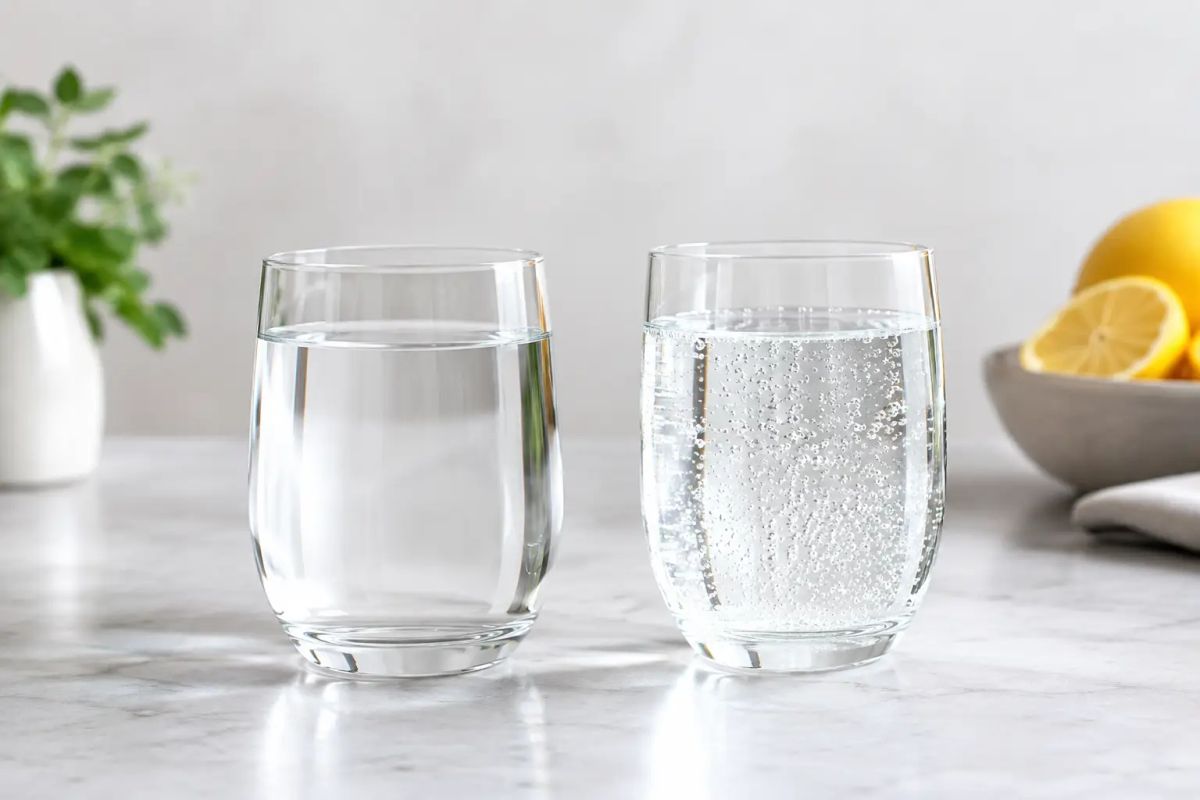
A quiet bottle of still water and a glass of sparkling may begin with the same essential element, but they do not arrive at the table in the same way. In the still versus sparkling conversation, the real distinction is not simply whether bubbles are present. It is about texture, aroma, mineral expression, occasion, and the kind of finish you want from a drink.
There is a world inside every bottle. A water’s source and mineral composition can give it a soft, rounded character, a clean mineral snap, or a distinctly saline edge. Carbonation changes how those details meet the palate. Learning to notice that difference turns an everyday choice into a more intentional one.
Still Versus Sparkling: What Actually Changes?
Still water contains little to no dissolved carbon dioxide. Sparkling water contains carbon dioxide, either naturally occurring at the source or added during bottling. That gas creates pressure, visible bubbles, and a tactile sensation that alters the water’s perceived flavor.
Carbon dioxide also forms a small amount of carbonic acid when dissolved in water. This is why sparkling water can seem brighter, sharper, or more refreshing than its still counterpart, even when the mineral profile is similar. The effect is sensory, not a judgment of quality. Neither style is inherently more refined. Each simply speaks with a different voice.
Still water often presents its mineral character more directly. Calcium may read as creamy or chalky. Magnesium can bring a subtle bitter lift. Bicarbonate may create a smooth, almost velvety impression. In a sparkling water, carbonation can make those same elements feel crisper and more energetic.
The Source Matters as Much as the Sparkle
Not all bottled waters begin alike. Some emerge from protected springs, some from mineral-rich underground aquifers, and some from sources where natural carbonation is part of the water’s identity. Others are carbonated after the water is collected and prepared for bottling.
Natural sparkling mineral water can carry a particularly integrated character because its carbonation and dissolved minerals originate in the same geological story. That does not mean added carbonation is lesser. It simply creates a different style: often cleaner, more neutral, and designed around a precise level of effervescence.
When comparing bottles, look beyond the front-label language. The source origin tells you where the water began. The mineral analysis reveals what it gathered along the way. Total dissolved solids, commonly called TDS, offers a useful broad measure of dissolved mineral content, though it does not tell the complete sensory story on its own.
A low-TDS still water may feel light and understated. A higher-mineral sparkling water may seem structured, savory, and persistent. But the reverse can also be true. Carbonation level, temperature, glassware, and the balance among individual minerals all shape the final impression.
How Still Water Tastes
Still water rewards attention. Without bubbles moving across the tongue, its texture is easier to observe. Start with a clean glass at a cool, not icy, temperature. Take a small sip and let it rest briefly on the palate.
Notice whether the water feels delicate, silky, dense, dry, or mineral-forward. Does it finish quickly, or does a faint salinity or stony character linger? A water high in bicarbonate can seem rounded and calm. One with more calcium may feel fuller in the mouth. A lower-mineral water may offer clarity and restraint rather than weight.
Still water is often an elegant choice when you want flavors in food to remain precisely legible. Its quiet character can sit beside a dish without changing the rhythm of each bite. In fine dining, it also gives guests a chance to experience a water’s origin without the sensory punctuation of bubbles.
How Sparkling Water Tastes
Sparkling water announces itself before the first sip. The sound of the pour, the stream of rising bubbles, and the fine prickle on the tongue all contribute to its appeal. Yet not all carbonation feels the same.
Fine, persistent bubbles tend to feel delicate and polished. Larger, more forceful bubbles can make a water feel lively and bold. A heavily carbonated bottle may emphasize acidity and create a brisk finish. Gentle carbonation may preserve more of the water’s underlying mineral softness.
Sparkling water can be particularly compelling at the table because effervescence creates contrast. With richer dishes, bubbles can make the palate feel refreshed between bites. With salty foods, a mineral water with a subtle saline note may create a pleasing echo. The goal is not to follow a rigid rule. It is to find a pairing where the water contributes something distinct without taking over.
Choosing a Style for Food and Occasion
Consider still water when the setting calls for subtlety: a tasting menu with intricate flavors, a quiet lunch, or a moment when you want to compare mineral character closely. It is also a natural choice for coffee or tea service, where the water should not add carbonation-driven texture to the experience.
Choose sparkling when you want energy in the glass. An aperitif setting, a celebratory table, or a meal with roasted, fried, creamy, or richly seasoned elements can all welcome that lift. At a restaurant, offering both styles is not a formality. It acknowledges that guests have different palates and that food changes the ideal pour.
Temperature matters in either case. Very cold water can mute aroma and mineral nuance. Slightly less-chilled still water often reveals more texture, while sparkling water benefits from enough chill to keep its carbonation composed. Serve it in a clear, stemmed glass or a clean tumbler rather than drinking directly from the bottle when you want to assess its character.
Read the Label Like a Water List
A water label can offer more than marketing language. Look for the source, the stated mineral composition, and whether carbonation is natural or added if that information is provided. Calcium, magnesium, sodium, bicarbonate, sulfate, chloride, and silica each contribute to a water’s overall profile.
No single number determines whether a water will taste good to you. A water with higher TDS is not automatically more flavorful, and a low-TDS water is not automatically bland. What matters is balance. Two waters with similar TDS readings can taste entirely different because the minerals are present in different proportions.
pH is also frequently displayed, but it should be read in context. It is one data point among many, not a shortcut to taste or quality. For sparkling water, pH can be influenced by dissolved carbon dioxide, which is part of why it often reads differently from still water.
Water Sommelier brings these details into view through a simple camera scan, helping you identify a bottle and explore its mineral composition, TDS, pH, and source origin. Point. Shoot. Know. The purpose is not to reduce water to a score. It is to give you a more informed way to notice what is already in your glass.
A Better Way to Compare Bottles
If you are curious about still versus sparkling, try a small side-by-side tasting. Choose two waters from a similar source type, or try still and sparkling expressions from the same producer when available. Pour both into identical glasses and taste the still water first.
Then taste the sparkling water. Pay attention to texture before trying to name flavor. Does the carbonation make the mineral profile seem brighter? Does it shorten the finish, or make it linger? Return to the still water after the sparkling sample. The contrast often reveals details you missed at first.
There is no universally correct choice. Some palates gravitate toward still water’s composure and clarity. Others prefer the lift and ceremony of sparkling. The more useful question is not which one is better, but which character belongs at this table, with this meal, in this moment.
Scan any bottle. Discover its minerals, origin, and character. Get the Water Sommelier app.