
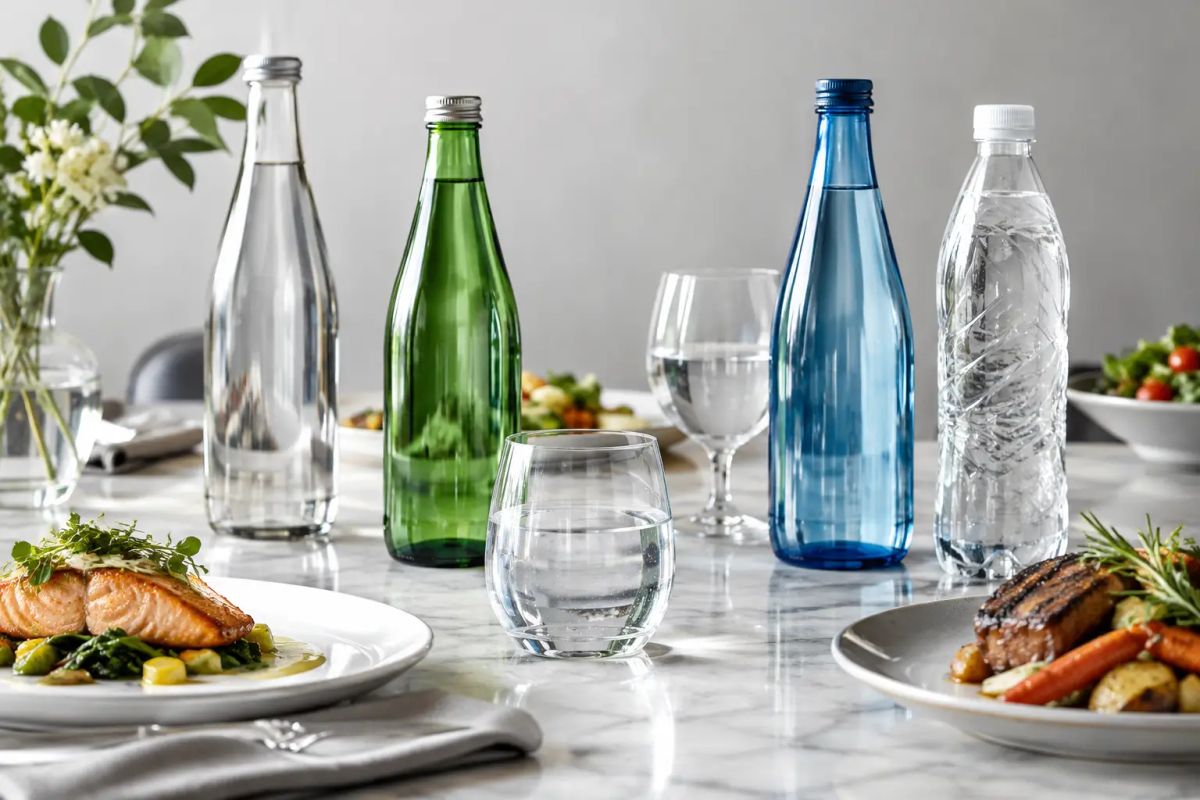
A dozen oysters can be transformed by the water beside them. Serve a soft, low-mineral still water and their clean salinity feels precise. Choose an aggressively sparkling, mineral-rich bottle and the same oyster may taste sharper, brinier, almost metallic. That is the pleasure behind seeking out the top bottled waters for food pairing: water is not merely present at the table. It has a texture, a finish, and a point of view.
Wine has long earned permission to shape a meal. Coffee has, too. Water deserves the same attention, particularly when a menu is built around fine ingredients, careful seasoning, and contrast. The right bottle can refresh the palate without erasing flavor. The wrong one can leave a faint bitterness, a heavy mineral impression, or a rush of carbonation where quiet would have been more elegant.
What Makes a Bottled Water Worth Pairing?
There is no universal best water. A water that is exquisite with caviar may be too commanding for a delicate crudo. The useful question is not, “Which bottle is most premium?” It is, “What will this water do alongside this dish?”
Start with four cues: total dissolved solids, mineral composition, carbonation, and source character. Total dissolved solids, often shown as TDS, offer a broad indication of how much mineral material is dissolved in the water. Lower-TDS waters often present as lighter and quieter. Higher-TDS waters can feel more structured, saline, creamy, chalky, or persistent, depending on the minerals involved.
Calcium can contribute a firm, sometimes chalky structure. Magnesium may bring a dry, subtly bitter edge. Sodium can make a water feel rounded or saline. Bicarbonate often lends softness and can create a fuller, more cushioned finish. These are sensory clues, not quality rankings. A high-mineral water is not inherently better than a low-mineral one. It simply occupies more space on the palate.
Carbonation changes the conversation further. Fine, restrained bubbles can lift rich food and reset the mouth between bites. Larger or more forceful carbonation makes a bigger statement, which can be thrilling with fried dishes and less successful with fragile flavors.
Top Bottled Waters for Food Pairing: Six Styles
Rather than memorizing a list of labels, learn the six water styles that perform beautifully at the table. Once you recognize them, you can choose confidently across restaurants, specialty markets, and your own dinner table.
1. Low-Mineral Still Water for Delicate, Raw, and Floral Dishes
This is the quietest, most accommodating table water. Low-mineral still water tends to have a light body and a clean finish, allowing subtle ingredients to remain in focus. Think oysters, scallop crudo, sashimi, tender lettuces, fresh goat cheese, and dishes finished with herbs or citrus zest.
Its trade-off is simplicity. With steak, aged cheese, or deeply savory sauces, it can disappear entirely. But for dishes where detail matters more than intensity, restraint is the point. Serve it cool, not ice-cold, so its texture remains perceptible without flattening the food.
2. Soft, Bicarbonate-Forward Still Water for Creamy Textures
A water with a rounded, soft character can sit beautifully beside creamy or gently rich preparations. Consider risotto, butter-poached seafood, roast chicken with a velvety sauce, fresh pasta, burrata, or mild triple-cream cheese.
Bicarbonate-forward profiles are often described as smooth or plush on the palate. That softness can mirror a dish rather than interrupt it. Still, match richness with care. If the plate already feels heavy, choose a water with a cleaner finish or introduce modest sparkle instead of adding more weight.
3. Lightly Sparkling Water for Seafood and Vegetable-Driven Menus
Light sparkle is one of the most flexible choices in restaurant service. Fine bubbles bring movement and freshness without becoming the main event. It is especially graceful with grilled fish, roasted vegetables, sushi, bright salads, ceviche, and dishes with a measured amount of acidity.
The small warning here is salt. A lightly sparkling water with noticeable minerality can amplify briny seafood or heavily salted sauces. That can be desirable with simple grilled prawns, for example, but less so with soy-forward sushi or cured fish. Taste the water first, then consider the seasoning, not just the central ingredient.
4. Crisp, Brisk Sparkling Water for Fried and Rich Foods
Fried chicken, tempura, arancini, French fries, croquettes, and flaky pastries welcome a more energetic sparkling water. Carbonation creates contrast against oil and crunch, while a crisp mineral profile can keep each bite feeling defined.
This is a pairing of tension. The food is warm, rich, and textural. The water is cool, lively, and direct. Choose a bottle with clean, persistent bubbles rather than a sweet or perfumed profile. At a casual dinner, this is often more rewarding than reaching automatically for a heavier beverage.
5. Mineral-Rich Still Water for Grilled Meats and Aged Cheese
When food has char, fat, smoke, or serious umami, a more mineral-driven still water can hold its ground. This style belongs with dry-aged beef, lamb, mushrooms, roasted roots, charcuterie, hard cheeses, and long-cooked sauces.
Look for waters that feel structured and lingering rather than merely salty. Calcium and magnesium can give the palate a firmer impression, while a higher overall mineral presence may make the water feel more substantial beside bold food. The limitation is obvious: these waters can overwhelm a simple white fish or a clean vegetable broth. Save them for plates with enough depth to answer back.
6. Saline-Leaning Sparkling Water for Shellfish and Aperitif Service
Some sparkling waters carry a subtle saline or savory suggestion. With chilled shellfish, olives, almonds, potato chips, or a pre-dinner seafood course, that character can feel exceptionally polished. The pairing works because the water echoes the food’s coastal notes while carbonation keeps the finish bright.
Use this style deliberately. Saline-leaning water beside a very salty dish can push the meal too far. It is better with pristine ingredients and modest seasoning, where its marine impression reads as harmony rather than excess.
Build the Pairing From the Plate, Not the Price
Price, glass packaging, and famous provenance can make a bottle feel ceremonial, but they do not automatically make it right for dinner. A modestly priced, low-mineral still water may be the superior choice for a nuanced tasting menu. A dramatic, high-mineral sparkling water may be exactly what a plate of fried oysters needs.
Begin with the dish’s dominant quality. Is it delicate or powerful? Creamy or sharp? Salty, smoky, spicy, fatty, or floral? Then choose whether the water should echo that quality or contrast it. Soft water can echo a silky dish. Sparkling water can contrast a fried dish. Mineral-rich water can stand beside a grilled dish. A clean, low-mineral water can make room for nearly anything subtle.
Temperature matters, too. Very cold water is refreshing, but extreme cold suppresses aroma and texture. Still water generally shows more character when served chilled rather than near-freezing. Sparkling water can be colder, especially when it is meant to cut through richer fare. Pour into a proper glass when possible. The shape will not turn water into wine, but it does make bubbles, aroma, and mouthfeel easier to notice.
Read the Bottle Like a Sommelier
A label can reveal more than a source name. Look for the mineral analysis, especially calcium, magnesium, sodium, bicarbonate, and TDS. Not every bottle prints every detail, and values can be presented in different ways, but the information gives you a starting map.
If you are standing in a shop or preparing a restaurant table, Water Sommelier can help turn that map into something more immediate. Point your phone camera at a bottle to identify the product and view educational details about its mineral composition, pH, TDS, and source origin. The value is not a verdict on which water is “best.” It is context for understanding why one bottle feels delicate, another feels stony, and another finishes with a saline edge.
Taste is still the final authority. Two waters with similar mineral numbers can feel different because of carbonation, temperature, source expression, and the way those minerals meet on the palate. Use data to narrow the field, then let the glass decide.
At your next dinner, place two different waters on the table instead of one: a quiet still bottle for the opening course and a more expressive sparkling bottle for the richer plate that follows. There is a world inside every bottle, and the meal gives it a reason to speak.
Scan any bottle. Discover its minerals, origin, and character. Get the Water Sommelier app.