
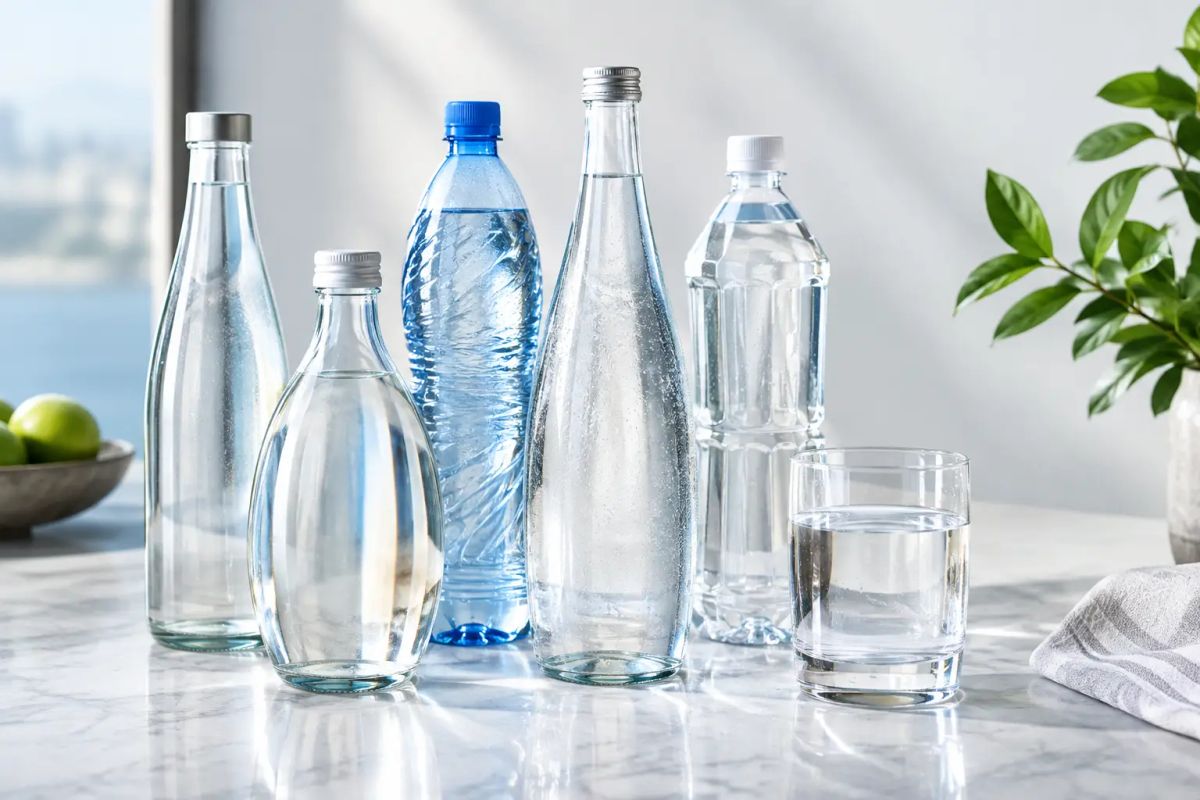
A bottle of water can be quiet, but it is never blank. Its source, mineral balance, carbonation, and temperature all leave an impression on the palate. The top bottled waters for tasting are not simply the most expensive or most recognizable. They are bottles with a distinct point of view: silky and restrained, crisp and saline, softly sweet, or charged with a vivid mineral finish.
This is not a ranking of what everyone should drink. Taste is personal, and the right bottle depends on the moment, the food, and the character you want in the glass. Consider this a curated starting point for building a more attentive water ritual.
What Makes a Bottled Water Worth Tasting?
Water tasting begins with origin. Spring water, mineral water, artesian water, and naturally sparkling water each arrive with a different geological story. As water moves through rock and soil, it gathers dissolved minerals that influence its texture, aroma, and finish.
Calcium can read as structured or chalky. Magnesium may create a gentle savory or bitter edge. Bicarbonate often lends softness and breadth, while sodium can make a water feel rounded or lightly saline. TDS, or total dissolved solids, offers a useful indication of mineral presence, but it is not a score for quality. A low-TDS water can be elegant and delicate; a higher-TDS water can be expressive and deeply gastronomic.
The best tasting experience comes from comparison. Pour two or three waters side by side in clean, stemmed glasses. Taste them at cool, not icy, temperature. Let each sit on the tongue, then notice texture, carbonation, and the flavor that remains after you swallow.
Top Bottled Waters for Tasting by Sensory Style
For a soft, polished still-water profile: Acqua Panna and Evian
Acqua Panna is a natural choice for people drawn to a smooth, rounded palate. Sourced in Tuscany, it is often appreciated for its gentle mineral presence and calm finish. It does not demand attention with sharpness or salinity. Instead, it has an enveloping quality that suits a long lunch, delicate vegetables, fresh pasta, or mild cheese.
Evian offers another refined still-water benchmark, with a profile shaped by its Alpine source. It typically feels clean yet substantial, with more structure than a very low-mineral water. Its appeal is balance: enough character to be recognizable, enough restraint to work across a wide range of foods. Compare it with Acqua Panna and you may find that one feels creamier while the other feels firmer and more direct.
For a clean, restrained profile: Voss and Icelandic Glacial
Some tasters prefer water that feels almost architectural: cool, pure in expression, and quietly composed. Voss and Icelandic Glacial occupy this territory well. Their appeal is not an overtly mineral or savory finish, but a smooth, low-key clarity that allows small differences in temperature and glassware to become more noticeable.
These are useful bottles for learning what restraint tastes like. Serve one beside a more mineral-forward water and the contrast becomes immediate. The lighter profile can also be a thoughtful companion to pristine raw-bar presentations, simply prepared seafood, or foods where the water should not compete for attention.
For a fuller mineral signature: Gerolsteiner and Mountain Valley
Gerolsteiner is a classic lesson in mineral character. Naturally sparkling and sourced in Germany's volcanic Eifel region, it has a distinctly energetic personality. The carbonation is part of the experience, but the mineral structure is what gives it presence. Many tasters notice a savory, stony impression and a finish that lingers longer than in lighter sparkling waters.
Mountain Valley, sourced from a spring in Arkansas, is another compelling choice for those who enjoy substance in still water. Its profile is often described as rounded and mineral-led rather than neutral. It is especially rewarding in a tasting lineup because it demonstrates that still water can have as much palate interest as a sparkling bottle.
Both bottles suit food with weight and texture. Think aged cheeses, roasted mushrooms, charcuterie, or a well-composed lunch where the water deserves its own glass rather than an afterthought pour.
For classic fine-dining sparkle: S.Pellegrino and Perrier
S.Pellegrino has long held a place at the dining table because its carbonation is persistent yet generally elegant, while its mineral character gives it enough body to stand alongside food. It is a useful all-purpose sparkling water for tasting because the elements are easy to identify: fine bubbles, mineral breadth, and a dry, refreshing close.
Perrier is brighter and more bracing in style. Its personality is often defined by a sharper sparkle and a more assertive mineral impression. Where S.Pellegrino can feel composed and rounded, Perrier can feel lively and angular. Neither is inherently better. The choice comes down to whether you want a water that cushions a dish or cuts through its richness with greater tension.
For a vivid, celebratory profile: Topo Chico
Topo Chico brings a bolder sparkling-water experience. Its carbonation has real lift, creating a crisp, festive sensation that is immediately recognizable in a blind tasting. That intensity is exactly why it belongs in a tasting set: it makes carbonation feel like a flavor and texture of its own.
Pour it beside Perrier or S.Pellegrino rather than tasting it alone. Notice bubble size, the speed at which the sparkle softens, and whether the finish feels dry, mineral, or faintly saline. These details turn a familiar bottle into a more considered experience.
How to Build a Better Bottled Water Tasting
Start with three waters, not ten. A simple flight might include one soft still water, one mineral-forward still water, and one naturally sparkling water. Acqua Panna, Mountain Valley, and Gerolsteiner would make an instructive trio, but any bottles with clearly different profiles can work.
Use identical glasses and pour small amounts. Begin with the lightest still water, move to the fuller still water, then finish with sparkling. Between pours, pause rather than rushing to cleanse the palate. Water's distinctions are subtle, and a few moments of attention make them clearer.
As you taste, ask precise questions. Does the water feel light, creamy, crisp, dense, or saline? Are the bubbles soft and integrated, or forceful and lively? Does the finish disappear quickly, or does it leave a mineral echo? There is no need to force a grand descriptor. A useful tasting note is simply one that helps you recognize the water again.
Food can sharpen the experience, but it can also obscure it. Taste each water on its own first. Then try it with a small piece of bread, cheese, fruit, or a plainly prepared bite. Sparkling waters often create contrast with rich foods, while still waters may either soften a dish or mirror its delicacy. The pairing is a conversation, not a rule.
Read the Label, Then Taste Beyond It
A label can tell you where a water begins, but sensory attention tells you how it arrives. Look for source origin and whether the water is still or naturally sparkling. If a mineral analysis is available, calcium, magnesium, sodium, bicarbonate, and TDS provide helpful context for what you may perceive in the glass.
For a quicker way to bring those details into a tasting, Water Sommelier lets you point your phone camera at a bottle to identify the product and explore information such as mineral composition, pH, TDS, and source origin. Point. Shoot. Know. Then let your palate have the final word.
The most memorable bottle is rarely the one with the loudest reputation. It is the one that makes you pause after a sip, recognize its particular shape on the palate, and realize there is a world inside every bottle.
Scan any bottle. Discover its minerals, origin, and character. Get the Water Sommelier app.