
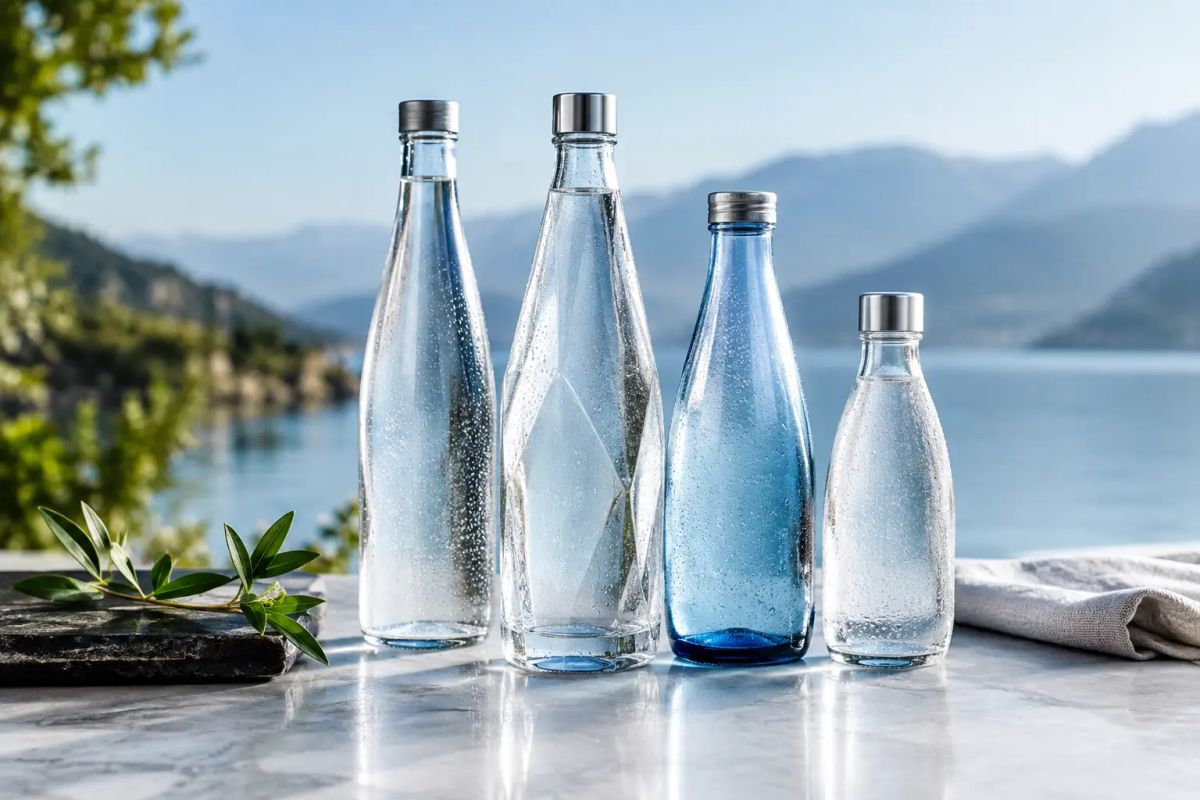
A bottle arriving tableside in a fine-dining room is no longer simply a choice between still and sparkling. Its glass, label, source, temperature, mineral profile, and even the shape of its bubbles can signal a point of view. The most compelling trends in premium bottled water reveal a category becoming more articulate: less about status alone, more about provenance, composition, and the pleasure of paying attention.
There is a world inside every bottle. For curious drinkers, that world begins with a simple question: what, exactly, am I tasting?
Premium bottled water trends are becoming more specific
Premium water used to be marketed largely through a visual language of Alpine peaks, deep aquifers, and elegant packaging. Those cues still matter, but they are increasingly joined by details that invite closer scrutiny. People want to know whether a water is naturally sparkling or carbonated after bottling, whether it is spring water or mineral water, and which dissolved minerals give it its particular character.
This shift mirrors what happened in coffee, wine, olive oil, and chocolate. As consumers learned to recognize processing, place, and flavor, broad labels gave way to more precise questions. Water is following that path, although its vocabulary remains refreshingly approachable. Calcium, magnesium, sodium, bicarbonate, pH, and total dissolved solids, or TDS, are becoming part of the conversation.
That does not mean every bottle needs to become a technical exercise. A mineral panel is not a scorecard, and a higher or lower TDS figure does not automatically make a water better. It is context. Low-mineral water can feel light, clean, and quietly neutral. Mineral-rich water can feel rounder, more structured, saline, or even gently savory. Preference depends on the occasion, the food, and the drinker.
Origin is moving from backdrop to identity
The strongest premium waters have a clear sense of place. A source is no longer a decorative line on a label. It is part of the product's identity, because geology shapes a water long before it reaches the table.
As water travels through rock and soil, it may collect naturally occurring minerals that influence its texture and taste. A water from a limestone-rich environment may present a different profile from one filtered through volcanic rock. The point is not to reduce a landscape to a marketing claim. It is to recognize that source and composition belong together.
For restaurants, this creates a more meaningful service opportunity. Rather than presenting water as an afterthought, staff can describe it with the same restraint and care used for bread, coffee, or wine. A concise explanation of origin and style is usually enough: crisp and low-mineral, softly textured and bicarbonate-led, or lively with fine natural carbonation. The best service feels informed, never theatrical.
There is also a growing appetite for traceability. Discerning buyers are looking beyond vague language and toward information that is specific enough to be useful. Source origin, water type, mineral composition, and bottling details help turn a beautiful bottle into a more transparent choice.
Mineral character is becoming a taste language
One of the most interesting developments in premium bottled water is the rise of sensory vocabulary. For years, the category leaned on the word “pure,” which can be appealing but says very little about how a water actually drinks. Now, more people are comfortable describing water in terms of body, finish, softness, brightness, salinity, and effervescence.
Minerals are central to that language. Calcium and magnesium can contribute to a feeling of structure or texture. Bicarbonate may lend a rounded, smooth impression. Sodium, depending on level and overall balance, can register as a subtle saline note. TDS offers a broad indication of dissolved mineral content, but it cannot tell the entire sensory story on its own. Two waters with similar TDS can taste notably different because their mineral balance differs.
This is where tasting becomes more useful than memorization. Pour water into a clean glass at a moderate cool temperature, rather than ice-cold, and take a moment before swallowing. Notice the opening impression, the weight across the palate, and the finish. Does it disappear quickly? Does it feel silky? Is there a mineral edge or a faint saline lift?
The goal is not to perform expertise. It is to develop preference. Once a drinker recognizes the difference between a delicate water and a more expressive one, the bottled-water aisle becomes less generic and far more interesting.
Sparkling water is getting more nuanced
Sparkling water remains a key signal of premiumization, but the conversation has moved beyond whether it has bubbles. Carbonation style matters. Natural carbonation, where carbon dioxide is present at the source, often carries a particular story and personality. Water carbonated during bottling can also be excellent, with producers able to create a consistent level of effervescence.
What the drinker notices is texture. Some bubbles feel vigorous and sharp, arriving with a brisk, almost percussive energy. Others are finer and more integrated, giving the water a creamy or delicate mousse-like effect. Neither is universally superior. A vivid sparkling water may stand up beautifully beside rich or fried dishes, while a gentler one can be more graceful with lighter fare.
The premium trend is not simply more sparkle. It is intentional sparkle, chosen for its sensory role at the table.
Packaging is being judged on more than appearance
Glass still carries tremendous appeal in premium settings. It feels ceremonial, photographs well, and can reinforce the sense that water deserves a place in a thoughtful beverage program. But the category is becoming more realistic about packaging. Beautiful design is only one consideration among transport, recycling systems, venue needs, weight, breakage risk, and the material's broader lifecycle.
That complexity matters. There is no single packaging answer that fits every source, service format, or market. A restaurant may value the presentation and reuse potential associated with one format, while a traveler may prioritize portability. The more credible premium brands avoid treating packaging as a simple virtue signal. They offer clear information and allow consumers to weigh the trade-offs.
Design is evolving, too. The most effective labels make room for both beauty and legibility. They communicate origin without obscuring it, and they make mineral information easier to find without turning the bottle into a laboratory report. Quiet confidence is replacing visual clutter.
Water pairing is moving beyond fine dining
Water pairing has long had a home in high-end hospitality, yet the practice is becoming more accessible. It does not require a formal tasting menu or a sommelier station. At its simplest, pairing means choosing a water whose body and carbonation suit the food and the moment.
A low-mineral still water can feel unobtrusive beside delicate vegetables, raw seafood, or a carefully brewed tea. A water with more mineral presence may be satisfying alongside aged cheeses, roasted dishes, or foods with savory depth. Sparkling water can provide contrast with creamy textures and richer plates. These are not rigid rules. A dish can change with seasoning, temperature, and texture, and personal taste should always lead.
For hosts, this is a small but memorable form of hospitality. Offering two distinctly different waters and inviting guests to notice the contrast creates a conversation without asking anyone to become an expert. The ritual feels generous because it pays attention to something usually overlooked.
Information is becoming part of the luxury
The next phase of premium water is not about making every purchase more complicated. It is about making knowledge available at the moment curiosity appears. Consumers increasingly expect a bottle to offer more than a logo and a source name. They want a readable path from label to understanding.
Water Sommelier reflects this new kind of curiosity. Point a phone camera at a bottle, and the app helps identify the product while surfacing educational details about its source origin, mineral composition, pH, and TDS. It turns a quick glance in a restaurant, market, or hotel into a more informed tasting moment.
That kind of access matters because premium is increasingly defined by discernment. A bottle does not need to be rare, expensive, or heavily branded to be worth attention. Its value may be found in a distinctive mineral balance, an evocative place of origin, a beautiful service ritual, or simply the clarity with which it tells its story.
The most lasting trend is this: water is being treated with greater respect. Not as a blank accessory to a meal, but as a beverage with origin, structure, and character. The next time a bottle is placed on the table, read past the label's surface. Taste slowly. Let the water introduce itself.
Scan any bottle. Discover its minerals, origin, and character. Get the Water Sommelier app.