
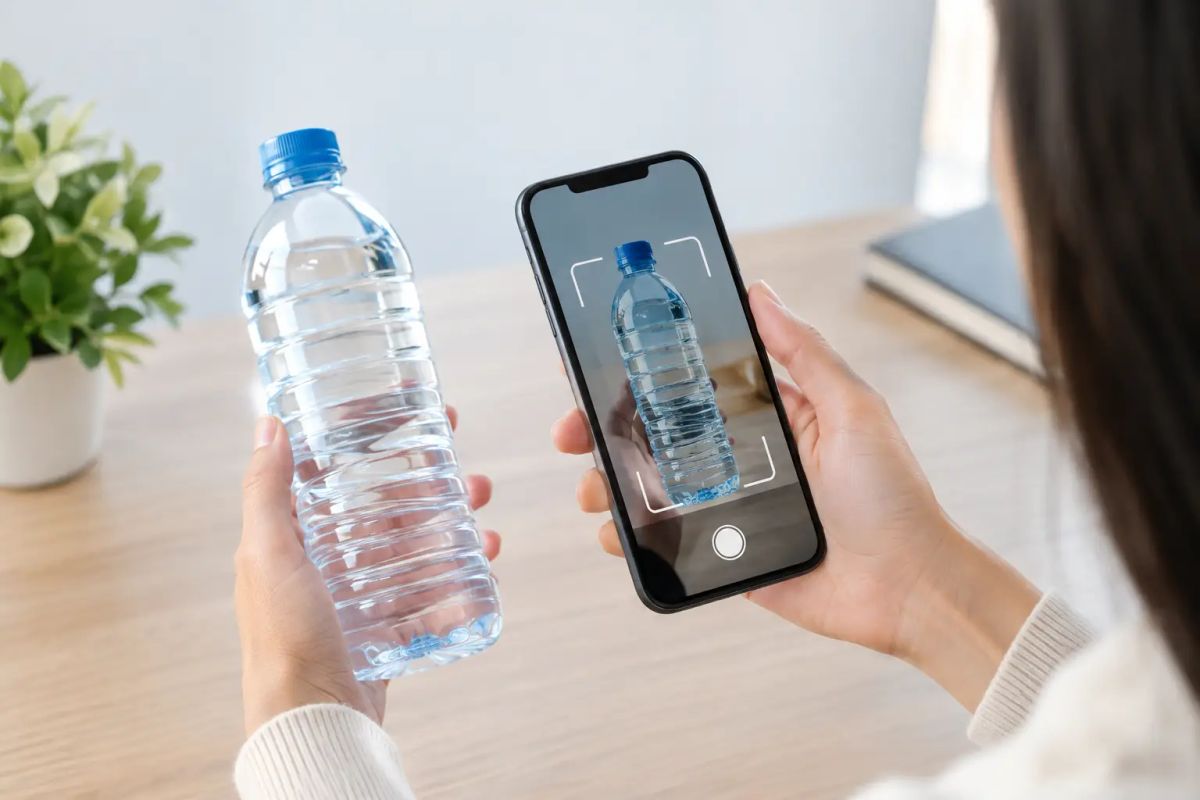
A bottle of water can look simple until you place two of them side by side. One comes from a mountain spring, another from a deep aquifer. One carries a crisp mineral profile; another is softer, quieter, almost weightless on the palate. Water recognition apps make those differences easier to see before the first sip.
For anyone who reads a wine list with interest, compares coffee origins, or pays attention to the details behind a meal, water deserves the same consideration. The label is a starting point. The mineral composition, source, pH, and total dissolved solids offer a more complete story.
What water recognition apps actually do
At their best, water recognition apps use a phone camera to identify a bottled water product and present its available product information in a clearer, more useful format. Rather than asking you to decode fine print while standing in a market aisle or sitting at a restaurant table, they bring the bottle's identity and composition into focus.
That distinction matters. A recognition app is not a laboratory instrument, and it does not analyze the liquid in your bottle in real time. It identifies the product from its packaging and surfaces information associated with that product. The value is context: a faster way to understand what a producer says is in the water and where it comes from.
Water Sommelier takes this approach with a simple premise: point your phone camera at a water bottle, identify it, and explore its mineral composition, pH, TDS, and source origin. The experience treats water as a category with provenance and personality, not merely a generic purchase.
Recognition is only the first step
A bottle match is useful, but the more meaningful moment comes after recognition. This is where an app can translate a technical label into terms that are easier to compare. Calcium, magnesium, sodium, bicarbonate, pH, and TDS are not just a row of numbers. Together, they help describe the water's structure and likely sensory character.
The best experience leaves room for curiosity. A number alone does not declare one water universally better than another. It simply helps explain why two waters can feel distinctly different at the table.
The numbers worth noticing on a water profile
Water labels often include more information than most people realize. A recognition app can make each element easier to find, but it is still helpful to know what you are looking at.
Calcium and magnesium
Calcium and magnesium are naturally occurring minerals often listed in milligrams per liter. In tasting terms, they can contribute to a water's sense of body and texture. Higher or lower values are not a ranking system. They are part of the profile, much like acidity and body help describe a coffee.
A water with noticeable calcium and magnesium may present itself differently from one with very low mineral content. The useful question is not, “Which number wins?” It is, “What kind of water am I looking for with this meal, this occasion, or this personal preference?”
Sodium and bicarbonate
Sodium is another naturally occurring component that can vary substantially among bottled waters. Bicarbonate, meanwhile, is commonly associated with alkalinity and can be a prominent part of a mineral water's composition.
These figures are especially interesting when comparing bottles that seem similar at first glance. Two sparkling waters may share an elegant bottle and a familiar format while having very different mineral balances. Reading beyond the front label turns a casual choice into an informed one.
pH and TDS
pH describes how acidic or alkaline a water is on a scale. It is frequently highlighted in water marketing, but it is best read as one characteristic among several, not as a verdict on the bottle.
TDS, or total dissolved solids, measures the combined amount of dissolved mineral material in water. It can offer a broad sense of mineral intensity. A lower-TDS water may feel more delicate or neutral; a higher-TDS water may seem more pronounced, mineral-forward, or structured. These are tasting cues, not rules. Source, carbonation, serving temperature, and the individual drinker all shape the experience.
Source origin
Origin gives the profile a sense of place. Spring, mineral, and artesian sources reflect different geological journeys, and producers may describe the protected source from which their water is drawn. For a curious drinker, this is part of the pleasure.
A water from a volcanic region, a limestone aquifer, or a high-altitude spring arrives with a different story. The app does not replace that story. It gives you a way to notice it.
How to use a water recognition app with more intention
The most practical moment to use an app is often the moment before you buy. Scan or identify a bottle when you are choosing between unfamiliar options in a grocery store, stocking a hotel room, or considering the water list at dinner. Instead of deciding entirely by package design or price, you can compare the details that shape the category.
Start with origin and mineral composition. Then look at TDS to understand the broader mineral presence. Finally, consider pH as one piece of the overall picture. This order keeps the experience grounded in the full profile rather than reducing a nuanced product to a single headline number.
At a restaurant, water can be considered with the same thoughtfulness as wine. A restrained, low-mineral still water may suit a meal where subtle flavors need room. A more mineral-present sparkling water can bring a different kind of energy to a richer table. There is no universal pairing chart because food, serving temperature, carbonation, and personal taste all matter. The point is to give water a place in the conversation.
For writers, hospitality teams, and attentive hosts, recognition apps also create a shared vocabulary. “Crisp,” “soft,” “mineral-forward,” and “light-bodied” become more meaningful when connected to the bottle's source and composition.
What to look for before relying on the result
A useful water app should make a clear separation between product information and interpretation. It should present details in readable language without turning mineral data into sweeping promises. Water is a food and beverage category worthy of attention, but it should not be burdened with exaggerated claims.
Look for a tool that shows the core details you want to compare: mineral composition, pH, TDS, and origin. Just as importantly, consider how clearly the information is organized. A crowded screen full of unexplained figures can make a bottle feel more mysterious, not less.
Recognition also depends on what the camera can see. Glare, a partially covered label, unusual packaging, and limited product information can affect the result. If a bottle is not recognized immediately, that does not diminish the bottle or the category. It simply reflects the practical limits of image-based identification.
A better way to read the bottle
The most compelling water recognition apps do not tell you what to like. They give you the language to notice what you like. Perhaps you return to waters with a clean, quiet profile. Perhaps you enjoy the distinct mineral signature of a particular source. Perhaps the origin becomes as interesting as the bottle's design.
There is a world inside every bottle, shaped by geology, source, and time. Point. Shoot. Know. Then let your own palate decide what belongs at your table.
Scan any bottle. Discover its minerals, origin, and character. Get the Water Sommelier app.