
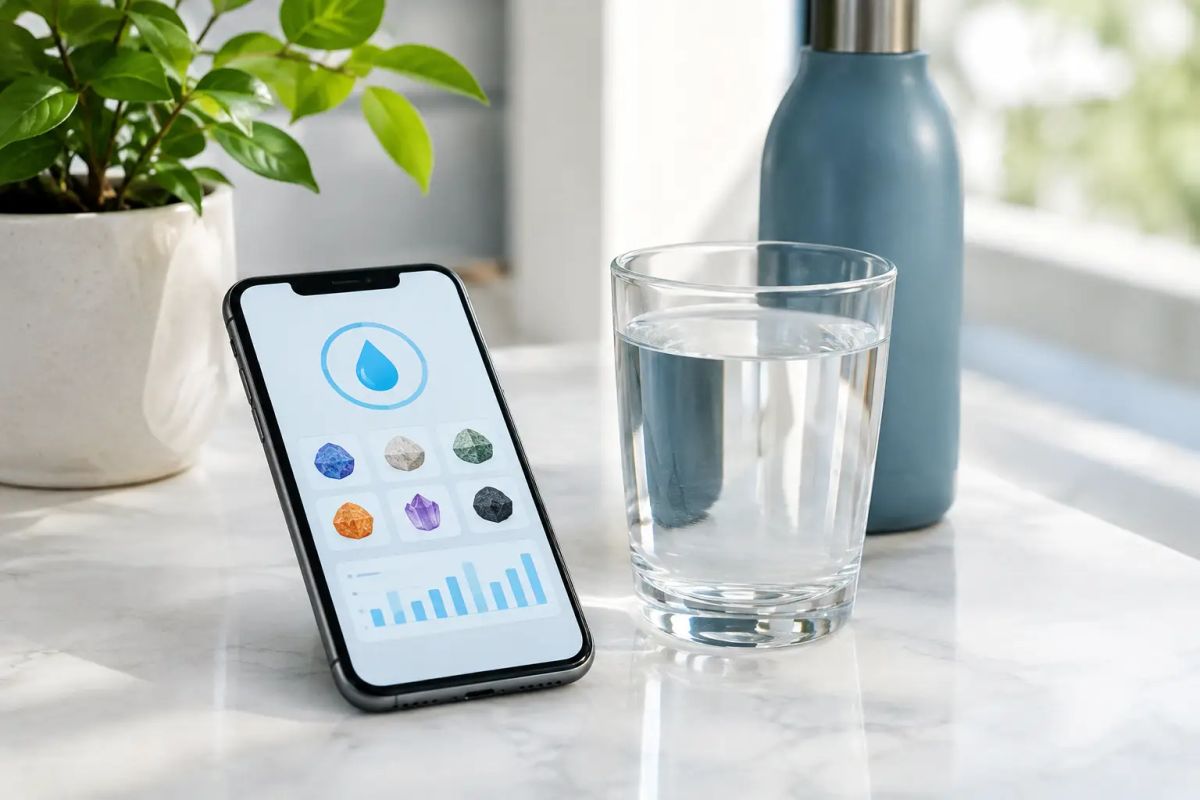
A bottle of water can look almost silent on the table: clear glass, a clean label, a familiar name. Yet the source, mineral composition, and dissolved solids inside can give it a distinct identity. Mineral reference apps turn that small print into something you can actually use, whether you are choosing a bottle for dinner, comparing two labels in a market, or simply becoming more fluent in what is in your glass.
There is a world inside every bottle. The best way to approach it is with curiosity rather than a search for one universally “best” water. Mineral profile is a matter of character, origin, and preference.
What mineral reference apps are designed to do
Mineral reference apps organize water information that is often printed in a cramped format, inconsistently presented, or absent from the front label. Their value is not in making water complicated. It is in giving context to details that deserve a second look.
A useful app helps connect a product with the facts that shape its profile: where it comes from, which minerals are reported, its pH, and its total dissolved solids, commonly called TDS. Instead of treating these figures as a technical scorecard, it presents them as a language for comparison.
For a diner building a thoughtful table, that language can make a bottle feel chosen rather than incidental. For a food writer or hospitality professional, it offers a practical starting point for describing water with the same care usually reserved for wine, coffee, or tea.
Water Sommelier, for example, lets users point a phone camera at a bottle to help identify the product and surface educational information about its origin, mineral composition, pH, and TDS. The essential appeal is immediate: Point. Shoot. Know.
The numbers worth understanding
Not every figure on a water label carries the same meaning. A good reference experience places the figures side by side so you can see a profile, not just a collection of numbers.
Calcium and magnesium
Calcium and magnesium are commonly listed minerals in bottled water. From a tasting perspective, they can contribute to a water’s sense of structure and texture. A water with a more pronounced mineral presence may feel firmer or more substantial on the palate than one with a very light profile.
The exact sensory impression depends on the full composition, not one mineral in isolation. That is why comparisons are more revealing when you look at the label as a whole.
Sodium and bicarbonate
Sodium is another label detail people often notice, while bicarbonate is frequently associated with the character of waters from particular geological sources. Together with other reported minerals, they help tell the story of water’s route through rock and aquifer.
Those figures are not a ranking system. They are descriptors. A low-sodium water and a more mineral-forward water can each be excellent choices for different tastes, dishes, and occasions.
pH
pH indicates whether water is measured as more acidic, neutral, or more alkaline. It is one of the most visible numbers in water marketing, which can make it seem more decisive than it is. In a mineral reference app, pH is most useful as one point of context alongside source and composition.
A pH value does not describe flavor by itself, and it does not replace an overall reading of the label. Treat it as part of the profile, not the headline.
TDS
TDS stands for total dissolved solids. It is a broad measure of the minerals and other dissolved material in water, usually expressed in milligrams per liter. It can offer a quick sense of whether a water is likely to read as delicate or more mineral-present, but it cannot tell you exactly which minerals create that impression.
Two waters with similar TDS can taste quite different because their mineral balances differ. TDS is a useful compass, not a complete map.
How to use mineral reference apps with more discernment
Start with the bottle you are already considering. Scan or identify it, then look at the source before rushing to the numbers. Spring, mineral, and other source descriptions provide cultural and geographic context, even when they do not predict taste on their own. Origin is part of the experience.
Next, compare mineral composition across two or three bottles rather than searching for a single perfect figure. One may present a lighter, quieter profile. Another may show more mineral presence and a longer finish. This side-by-side approach makes the data meaningful because it gives your palate a reference point.
Then take a sip without trying to force a verdict. Notice the opening impression, the texture across the tongue, and the finish. Does it feel crisp, soft, chalky, rounded, or clean? Sensory language is personal, and that is precisely the point. Technical information should sharpen your attention, not dictate what you are supposed to taste.
At the table, the same information can guide a more deliberate pairing. A delicate water may sit quietly beside a subtle dish, while a water with a more assertive mineral profile may hold its own beside richer flavors. These are invitations to experiment, not fixed rules. Serving temperature, glassware, food seasoning, and individual perception all matter.
What a good water reference experience should not promise
The appeal of an app can tempt people to reduce water to a dashboard of winners and losers. That approach misses the category’s nuance. Mineral data is valuable, but it is not a medical assessment, a guarantee of quality, or a substitute for the information provided by a producer.
It also helps to recognize the limits of bottle recognition and published details. Packaging can change. Different formats of a product may present labels differently. Mineral analysis can be reported in varying ways, and source information should be read in the context supplied for that specific product. When a detail matters to you, consult the current bottle label as well as the app’s educational presentation.
The strongest mineral reference apps respect that complexity. They make information easier to find without pretending that a number can capture the full experience of a water, its place of origin, or your own taste.
A better ritual for choosing bottled water
Choosing water with intention does not need to become ceremonial every time. Some days, the practical question is simply what is available. But when you have options, a mineral reference app gives you a reason to pause for ten seconds and see the bottle differently.
Read the source. Notice the mineral balance. Put TDS and pH in their proper place. Then taste with attention. Over time, you may find yourself recognizing the profiles you gravitate toward and the bottles that suit particular meals or moments.
That is the real pleasure of water literacy: not chasing a universal answer, but learning to recognize character. The next bottle on your table is already carrying a story. Give yourself the tools to read it.
Scan any bottle. Discover its minerals, origin, and character. Get the Water Sommelier app.