
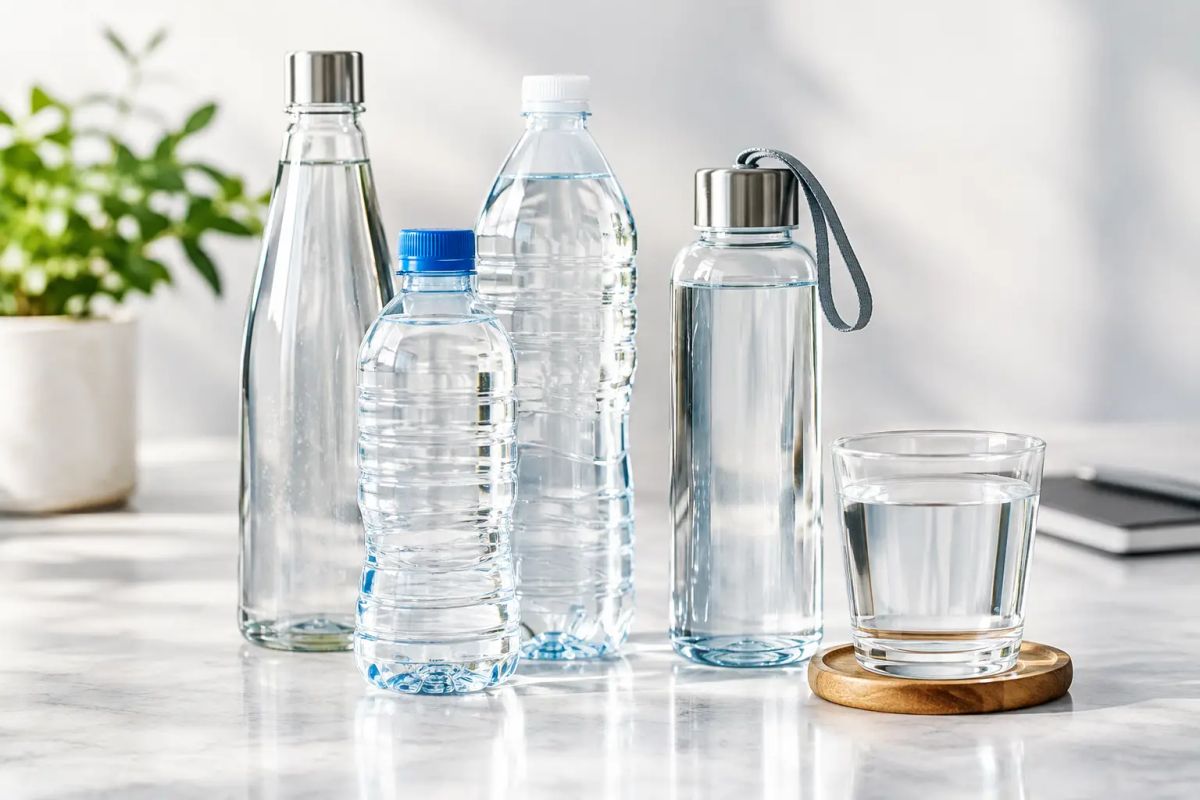
A bottle can look pristine, promise purity, and still tell you very little at first glance. The most useful bottled water reviews look past the front-label language to ask better questions: Where did this water begin? Which minerals remain? How does it feel on the palate? And does its character suit the moment, from a quick lunch to a composed dinner table?
There is a world inside every bottle. Reading it well turns a routine purchase into a more considered choice.
What Bottled Water Reviews Should Actually Evaluate
A worthwhile review is not a contest to declare one bottle universally “best.” Water preference is personal, and context changes perception. A crisp, low-mineral water may feel ideal beside a delicate seafood dish, while a more mineral-forward water can bring structure to a rich cheese course or simply offer a more expressive sip on its own.
The goal is to describe water with accuracy and useful detail. Start with its source and classification, then examine composition and sensory character. Packaging, availability, price, and the producer’s clarity about its product also matter. A bottle is a complete experience, but the liquid should remain at the center of the evaluation.
Source is the beginning of the story
Source origin gives water its sense of place. Natural spring water is collected from an underground formation that flows naturally to the surface or is accessed through a borehole. Mineral water typically retains naturally occurring minerals from its source. Artesian water comes from a confined underground aquifer, while purified water has been processed to remove dissolved material and may be remineralized afterward.
These categories are descriptive, not a hierarchy. A purified water can offer a clean, neutral profile. A spring or mineral water may express geology more distinctly. What matters in a review is specificity: name the category, identify the stated origin where available, and distinguish naturally occurring mineral content from minerals added after treatment.
Source also provides cultural context. A water from a volcanic region, limestone aquifer, or alpine spring may carry a different mineral signature because it has moved through different rock formations. That origin is not just a romantic detail. It is part of the water’s composition and, often, its taste.
Mineral composition explains more than a slogan can
Calcium, magnesium, sodium, bicarbonate, sulfate, chloride, and silica are among the constituents that may appear on a water label or product analysis. Together, they create the profile behind the words “smooth,” “crisp,” “soft,” or “mineral-rich.”
Calcium and magnesium often contribute to a fuller, more structured palate. Bicarbonate can create a rounded impression and may soften sharper edges. Sulfate may read as dry or firm, while chloride can lend a subtle savory quality. Sodium deserves context rather than drama: its level varies widely by source, and it is simply one part of a water’s overall composition.
A strong review does not treat a single mineral as a scorecard. Balance matters. Two waters with similar total mineral content can taste strikingly different because the individual minerals are arranged differently. The numbers are useful, but the relationship between them is where the personality emerges.
How to Read Bottled Water Reviews With More Confidence
When comparing reviews, look for language that connects data to experience. A writer who calls a water “clean” without explaining why has offered a vague impression. A more useful description might note low total dissolved solids, a light body, a quick finish, and very little mineral presence.
Likewise, “premium” is not a tasting note. It may reflect glass packaging, an unusual source, elegant design, or a carefully positioned brand. Those can be legitimate parts of the experience, but they should not replace clear information about the water itself.
TDS offers a useful frame, not a verdict
TDS, or total dissolved solids, measures the combined concentration of dissolved substances in water, usually expressed in milligrams per liter. It is a helpful starting point for anticipating body and intensity.
Generally, a lower-TDS water may feel lighter and more neutral. A higher-TDS water may feel denser, more textured, or more persistent on the finish. But TDS cannot tell the whole story. It does not identify which minerals create the total, and it cannot predict whether you will enjoy the result.
Think of TDS as a map scale. It indicates the size of the landscape, not every feature within it. A thoughtful review pairs the number with mineral details and a sensory description.
pH belongs in the context, too
pH measures how acidic or alkaline a water is on a scale. It is frequently emphasized in marketing, but it should be treated as one descriptive data point rather than the headline of every review.
A water’s pH can be influenced by its geology, mineral makeup, and bottling process. For tasting purposes, it may be worth noting when it accompanies a distinctive profile, but pH alone does not capture texture, mineral balance, source, or finish. Reviews that put it in context are more useful than reviews that turn it into a shortcut.
Taste water the way you would taste coffee or wine
No elaborate ritual is required. Pour the water into a clean, odor-free glass, ideally at a cool rather than ice-cold temperature. Extremely cold water can mute its aromatic and textural details.
Take a small sip and notice the entry. Is it soft, bright, creamy, sharp, silky, or almost weightless? Let it move across the palate. Does it seem neutral or distinctly mineral? Then pay attention to the finish. Some waters disappear quickly and cleanly. Others linger with chalky, saline, dry, or stony notes.
These are not pretentious distinctions. They are practical vocabulary for recognizing what you prefer. Over time, you may find that your favorite water changes with food, setting, season, or occasion.
Packaging and Price Deserve an Honest Look
A review should acknowledge the vessel. Glass can feel appropriate for a restaurant setting or special occasion and often elevates presentation. Aluminum may appeal when portability and a different format are priorities. Plastic is common and practical for everyday use, though its role in the total experience is different from a glass bottle served tableside.
Price also needs perspective. A higher price can reflect transport distance, limited production, packaging, restaurant positioning, or brand design. It does not automatically indicate a more compelling water. Conversely, a modestly priced bottle may offer a beautifully balanced profile. The best value depends on what you want from the moment: pure utility, sensory interest, presentation, or a sense of origin.
A Better Standard for Bottled Water Reviews
The clearest reviews separate fact from preference. Facts include source category, origin, listed mineral composition, TDS, pH, carbonation status, bottle size, and packaging. Preference includes whether the water feels lively, comforting, neutral, refined, or especially suited to a particular meal.
This distinction makes room for disagreement without confusion. One person may love a pronounced mineral finish; another may prefer near-neutral water. Neither response is wrong. What matters is that the review gives enough information for the reader to anticipate the experience before opening the bottle.
For shoppers who want the data close at hand, Water Sommelier brings this approach into the aisle: point your phone camera at a bottle to identify the product and view educational details such as source origin, mineral composition, pH, and TDS. Point. Shoot. Know.
The next time you choose a bottle, pause before reaching for the most familiar label. Read the source, consider the mineral profile, and taste with attention. A better bottle is not always the most expensive or the most heavily marketed one. It is the one whose story, structure, and character meet the occasion in your hand.
Scan any bottle. Discover its minerals, origin, and character. Get the Water Sommelier app.