
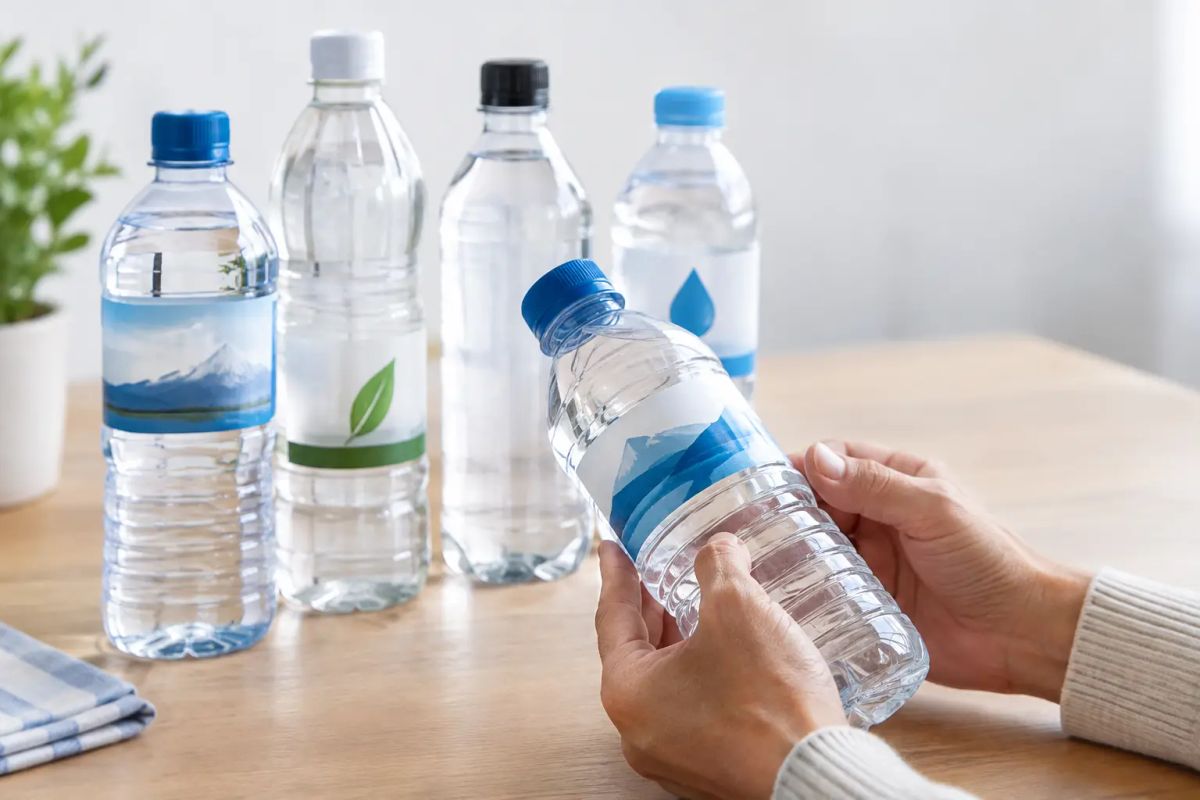
A bottle can look pristine and still leave you guessing. The source name may evoke a remote spring, while the fine print holds the details that shape its character: calcium, bicarbonate, sodium, total dissolved solids, and more. This water label glossary turns that fine print into something you can actually use - whether you are choosing a table water for dinner or comparing bottles on a store shelf.
There is a world inside every bottle. Reading it begins with knowing which numbers describe the water itself, which describe the bottling process, and which are simply marketing language.
Water Label Glossary: The Terms Worth Reading
Source
The source tells you where a water begins, not always every step that follows before bottling. Common terms include spring water, mineral water, artesian water, purified water, and sparkling mineral water. Each term has a specific regulatory context, but labels can present source information with different levels of detail.
A named spring, aquifer, or geographic region gives a bottle a sense of place. That place can influence its mineral profile and taste, much as soil and climate influence a wine. Still, source alone is not a complete quality score. Two waters from similar terrain may taste very different, and a water’s listed analysis is the more useful companion to its origin story.
Mineral Composition
A mineral analysis, sometimes called a typical analysis, lists dissolved minerals in the water. The values are commonly shown in milligrams per liter, abbreviated as mg/L. Because one liter of water is close to one kilogram, mg/L is also often discussed as parts per million, or ppm.
The word “typical” matters. Natural water is not a factory formula. Its composition can shift modestly with seasonal conditions, source variation, and bottling batches. Treat the panel as a well-informed portrait rather than an absolute promise that every bottle will contain the identical number.
Calcium
Calcium is one of the most recognizable minerals on a water label. In sensory terms, it can contribute to a rounder, more structured impression, especially when present alongside bicarbonate. Waters higher in calcium are often described as having weight or a chalky mineral edge, though taste remains a matter of balance rather than one ingredient.
Magnesium
Magnesium can bring a firmer, sometimes slightly bitter or savory note. It is a useful figure to compare when tasting several mineral waters side by side. A water with noticeable magnesium and low sodium may feel clean but distinctly mineral; with more bicarbonate, the same mineral can read as broader and more complex.
Sodium
Sodium is usually stated in mg/L and is among the easiest figures to spot. It can add a subtle saline quality, particularly in waters with a higher mineral load. Low-sodium waters tend to taste more neutral in this respect, while a higher number may be part of the water’s distinctive regional signature.
The right choice depends on the experience you want. A softly saline sparkling water can be compelling with oysters or salty snacks; a very low-sodium still water may let delicate tea or a quiet meal speak more clearly.
Bicarbonate
Bicarbonate, sometimes written as HCO₃⁻, is a central player in many expressive mineral waters. It often contributes a smooth, rounded, lightly alkaline-tasting profile and can soften the perception of acidity in food or wine when served alongside a meal.
Do not confuse bicarbonate with a verdict on quality. A low-bicarbonate water can be bright and elegant. A high-bicarbonate water can be plush and expansive. The number simply gives you a clue about style.
Sulfate, Chloride, and Potassium
These supporting minerals can add useful detail to a label. Sulfate may lend a dry, crisp, or slightly bitter finish. Chloride can contribute a gentle salty impression. Potassium is often present at lower levels and rounds out the overall mineral picture.
None should be read in isolation. A water is a composition, not a collection of soloists. The relationship among its minerals is what creates its particular texture, finish, and sense of place.
How to Read pH and TDS on a Water Label
pH
pH measures acidity and alkalinity on a scale from 0 to 14, with 7 considered neutral. Below 7 is acidic; above 7 is alkaline. On a water label, pH can be useful context, but it is often given more importance than it deserves.
A pH number does not tell you the complete taste story. Carbonation, mineral composition, temperature, and the food on the table all affect perception. A sparkling water may register a lower pH because dissolved carbon dioxide creates carbonic acid, yet still taste lively, refined, and beautifully balanced.
When comparing bottles, consider pH alongside bicarbonate and TDS rather than treating it as a standalone ranking.
TDS: Total Dissolved Solids
TDS stands for total dissolved solids. It estimates the combined amount of dissolved minerals, salts, and other naturally occurring inorganic material in water, usually expressed in mg/L.
As a practical tasting shorthand, lower TDS waters often feel lighter and quieter on the palate. Mid-range TDS waters can offer balance and texture. Higher TDS waters tend to be more assertive, with a fuller mineral presence and longer finish. These are tendencies, not rules. Two waters with the same TDS can taste dramatically different because their minerals are arranged differently.
Think of TDS as the volume knob, not the song. It signals overall concentration, while the individual mineral panel tells you what is creating that concentration.
Still, Sparkling, and Added Carbonation
A label may describe a water as naturally sparkling, naturally carbonated, carbonated, or sparkling. The distinctions can matter to a curious drinker.
Naturally carbonated water originates with carbon dioxide at the source, though bottling practices can involve capturing, adjusting, or reintroducing carbon dioxide. Carbonated or sparkling water may have carbon dioxide added during production. The label should provide clues, but the tasting experience is just as revealing: some bubbles feel delicate and creamy, while others are brisk, energetic, and short-lived.
For food pairing, bubble texture is as relevant as mineral level. Fine, persistent carbonation can refresh between rich bites. Softer effervescence may feel more integrated at the table.
What “Purified,” “Spring,” and “Mineral” Actually Signal
These category names are useful, but they are not interchangeable style labels.
Spring water is collected from an underground formation from which water flows naturally to the surface, or is accessed through a borehole under defined conditions. Mineral water generally refers to water with naturally occurring minerals from a protected underground source, though terminology and labeling rules vary by market. Purified water has been treated through methods such as reverse osmosis, distillation, or deionization to remove impurities and dissolved solids; minerals may sometimes be added afterward for taste.
This is not a hierarchy. A carefully made purified water can be clean and restrained. A naturally mineral-rich spring water can be vivid and terroir-driven. The more useful question is: what style of water do you want in your glass?
A Better Way to Compare Bottles
Start with four details: source, TDS, calcium and magnesium, then sodium and bicarbonate. Within a few seconds, you can form a reasonable expectation of whether a water may taste light, rounded, crisp, saline, or mineral-forward.
Then taste it properly. Serve it cool rather than ice-cold, especially if you want to notice nuance. Take a small sip, let it rest across the palate, and pay attention to texture, bubble size if sparkling, and the finish. Does it disappear quickly? Does it leave a stony, saline, creamy, or dry impression?
Water Sommelier can make this label-reading ritual more immediate. Point your phone camera at a bottle to identify the product and surface educational details about its mineral composition, pH, TDS, and source origin. The label becomes less of a code and more of an invitation to notice.
The next time you reach for a bottle, pause before choosing by packaging alone. Read the source. Read the minerals. Then let the water tell you, in its own quiet language, what kind of experience it was made to offer.
Scan any bottle. Discover its minerals, origin, and character. Get the Water Sommelier app.