
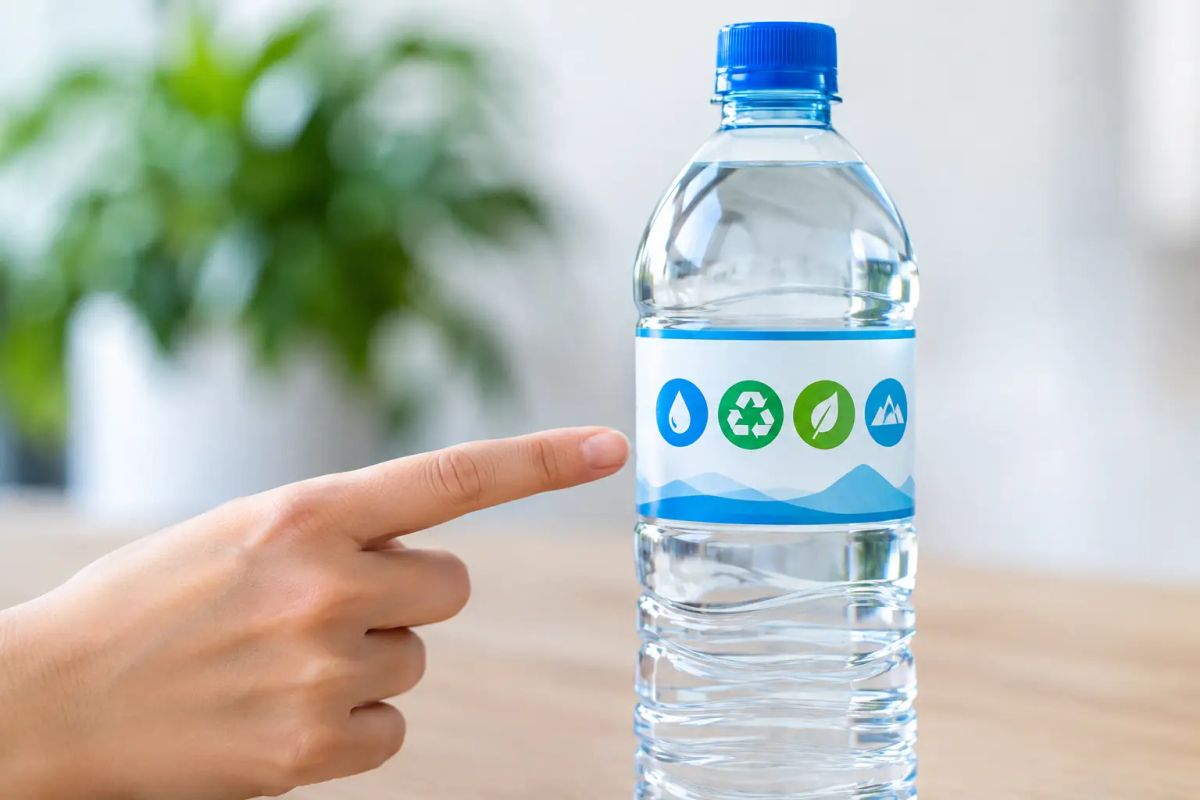
A water bottle can look almost silent at first glance: a logo, a landscape, a promise of clarity. Then you turn it around. Small icons, numbers, arrows, and certifications begin to appear. These water label symbols are not decoration. They offer clues about the package in your hand, the producer behind it, and sometimes the water itself.
Reading them well is less about memorizing every mark than knowing which questions to ask. Is this symbol about the bottle, the source, the contents, or a marketing claim? Once those categories are clear, the back label becomes much easier to read.
Start by Separating the Bottle From the Water
The most common mistake is assuming every symbol describes the water. Many marks apply only to packaging: the type of plastic, whether an item may be recyclable in a particular system, or how a cap should be handled. Others refer to production standards, while a smaller group helps explain source or composition.
That distinction matters because a bottle made from recycled material and a water with a naturally occurring mineral profile are entirely different pieces of information. Both can be useful. They simply answer different questions.
A useful way to read any label is to move from the outside in. First, identify the container and its disposal instructions. Next, look for origin and water type. Finally, examine any mineral analysis, which is where the most revealing details about character and taste often appear.
Water Label Symbols for Packaging and Recycling
The resin identification code
The familiar triangle of chasing arrows with a number in the center is a resin identification code. It identifies the plastic material used in the package. On bottled water, you may often see a number 1, which typically refers to PET or polyethylene terephthalate. Caps may be made from a different material and can carry a separate code.
This number is not a universal guarantee that an item will be accepted in every recycling program. It identifies material, not local collection rules. Recycling availability depends on where you live and on the capabilities of the facility handling that material.
The recycling symbol
A plain looping-arrow symbol can suggest that a package may be recyclable, while a variation with wording such as “check locally” is more specific about the reality: recycling systems vary. Treat this as an invitation to verify local guidance, not as a promise that every bin can process the bottle.
Some labels also state that a bottle is made with recycled content. That describes the material used to make the container. It does not describe the mineral composition, purity, or source of the water inside.
The tidyman symbol
A small figure placing waste in a bin is a simple disposal prompt. It has no bearing on recyclability, water quality, or product origin. Its message is straightforward: dispose of the package thoughtfully.
Deposit and return marks
Certain bottles carry symbols related to state deposit programs. These marks indicate that the container may be eligible for return in participating areas. They are especially relevant when traveling, because the rules attached to a bottle can change from one state to another.
Source Language Is a Clue, Not a Footnote
The words around a symbol or seal often reveal more than the symbol itself. Look closely at how the bottle describes the water: spring water, mineral water, purified water, artesian water, or sparkling water. These terms are not interchangeable, and they shape what you might expect from the bottle.
A source statement may name a spring, aquifer, or geographic region. It can also include bottling location, which is not necessarily the same as the source. A water may be bottled near its origin, or it may be packaged elsewhere. Read the phrasing carefully.
For people who approach water as they approach wine or coffee, origin is part of the experience. It gives context to mineral balance, texture, and style. A limestone-rich region, a volcanic landscape, and a deep aquifer can each leave a different signature, though the label should be your guide rather than assumptions about a place name.
Certifications and Claims Need Context
You may encounter seals that refer to quality systems, environmental programs, organic ingredients in flavored products, or third-party certifications. A seal can be meaningful, but it is worth reading the fine print beside it. What organization issued it? What does it specifically certify? Does it apply to the water, the packaging, the facility, or a separate ingredient?
This is where packaging can become visually busy. A prominent icon may communicate a narrow fact, while the details that matter to your preference sit in ordinary text nearby. A good reader gives the same attention to both.
Be equally thoughtful with broad terms such as “natural,” “pure,” or “premium.” These words may express a brand position, but they do not replace source information or a published mineral analysis. The most informative label is usually the one willing to be specific.
The Numbers That Describe What Is in the Bottle
Not all water bottles provide a detailed composition panel, but when they do, it is one of the most interesting parts of the label. You may see calcium, magnesium, sodium, potassium, bicarbonate, sulfate, chloride, nitrate, silica, pH, and total dissolved solids, often abbreviated as TDS.
These are not water label symbols in the graphic-icon sense, yet they function like a vocabulary of their own. They describe the dissolved mineral content that can influence a water’s sensory profile.
Calcium and magnesium can contribute to a more structured, mineral-forward impression. Bicarbonate is often associated with a softer, rounder feel. Sodium may be present in very small or more noticeable quantities, depending on the source. TDS is a broad measure of dissolved material, not a verdict on quality. A higher number does not automatically mean better, and a lower number does not automatically mean more refined. It points to a style.
pH is similarly easy to overread. It describes how acidic or alkaline a sample is on a scale, but it does not tell the full story of flavor or mineral balance. Two waters with similar pH values can taste quite different because their mineral compositions differ.
How to Read a Water Bottle With More Confidence
Begin with the front label, but do not stop there. Identify the stated water type and source. Turn to the side or back panel for the package material, disposal guidance, and any composition data. If the bottle shares a mineral analysis, compare the numbers across a few waters rather than treating one figure as the whole story.
Pay attention to serving size as well. Mineral values can be listed per liter, per serving, or in milligrams per liter. Comparing like with like makes the label far more useful. A number without its unit is only half an answer.
Photography can make tiny type difficult to parse in a store or restaurant setting. Water Sommelier offers a practical shortcut for bottles you encounter: point your phone camera at a water bottle to identify the product and view available information about its mineral composition, pH, TDS, and source origin. Point. Shoot. Know.
A Better Question Than “Is This Good Water?”
Instead of asking whether a label proves that one water is universally better than another, ask what it tells you about the bottle’s style and story. Is the container made from a material you recognize? Is the source clearly named? Does the label share mineral data? Does the profile sound crisp and light, quietly mineral, or more pronounced and expressive?
There is a world inside every bottle, but it rarely announces itself in one oversized claim. It appears in the small print, the source line, the mineral panel, and the modest symbols near the base. Read those details with care, and the next bottle becomes less of a routine purchase and more of a considered choice.
Scan any bottle. Discover its minerals, origin, and character. Get the Water Sommelier app.