
A bottle of water can be crisp and fleeting, softly sweet, bracingly mineral, or almost creamy on the palate. That is why the question, which water tastes the best, has no single universal answer. The most compelling water is the one whose character suits the moment, the meal, and your own sensory preferences.
Water is not a blank canvas. Natural source, mineral composition, carbonation, temperature, and even the glass in your hand influence what you perceive. Once you begin noticing those details, choosing water becomes less about a label claim and more about taste.
Which Water Tastes the Best? Start With the Minerals
Minerals are the quiet architecture of a water's flavor. They create weight, texture, finish, and sometimes a distinct savory or stony note. A water with very few dissolved minerals may taste clean and light, but it can also feel neutral or disappear quickly on the palate. A more mineral-rich water often has greater presence and a longer finish.
Calcium is frequently associated with a firm, structured impression. In the right balance, it can make water feel substantial and composed. Magnesium may add a slightly bitter, dry, or mineral-driven edge, particularly at higher levels. Sodium can bring roundness and a subtle savory quality, while bicarbonate often softens sharp edges and contributes to a smooth, almost velvety finish.
None of these qualities is automatically better. A water with a vivid mineral profile can be fascinating beside a meal, while a lighter expression may be exactly right when you want clarity and restraint. Taste is a matter of balance, not simply more or less.
TDS Is a Clue, Not a Scorecard
Total dissolved solids, or TDS, is a useful measure of the combined dissolved minerals in water. It can offer an early clue about intensity: lower-TDS waters tend to feel more delicate, while higher-TDS waters often feel denser and more pronounced.
But TDS does not tell the whole story. Two waters with a similar TDS can taste entirely different because their mineral makeup is different. One may be calcium-led and chalky, another bicarbonate-led and silky, another sodium-led and softly saline. Think of TDS as an indication of volume, not the full composition of the music.
Source Origin Shapes Character
The journey water takes before bottling matters. Waters drawn from protected springs, deep aquifers, glacial regions, and volcanic landscapes can each carry a different sensory signature, shaped by the rock and soil they encounter.
A water filtered slowly through limestone may develop a rounded, mineral-forward profile. Water moving through volcanic terrain may present a cleaner, sharper mineral expression. A deep aquifer can yield a composed, mature character, while a spring may feel bright and immediate. These are not rules, but they are useful starting points when reading a bottle's source information.
Origin also adds cultural context. Like coffee, wine, or olive oil, water can reflect a place. The source is not a marketing footnote. It is part of the story in the glass.
Still or Sparkling: Two Different Experiences
Still and sparkling water should not be judged by the same standard. Still water makes mineral balance easier to read. Without bubbles, you can focus on texture, weight, and finish. This makes it especially useful for a quiet tasting or for pairing with dishes where subtle flavors matter.
Sparkling water introduces carbon dioxide, which changes the experience immediately. Fine, persistent bubbles can feel elegant and refreshing, while larger, more energetic bubbles can feel lively and dramatic. Carbonation also lifts aroma and cuts through rich textures, which is why sparkling water often earns its place at the table.
The best choice depends on the occasion. A poised still water may suit delicate seafood, fresh fruit, or a contemplative afternoon glass. A more forceful sparkling water can stand up to fried dishes, creamy sauces, or a celebratory aperitif. Neither is inherently superior. They simply speak in different registers.
Temperature Can Hide or Reveal Flavor
Ice-cold water is satisfying, but extreme cold can mute flavor. When a water is served straight from a very cold refrigerator, its finer mineral notes may become harder to detect. As it warms slightly, texture and finish often become more apparent.
For a casual refreshment, serve water as cold as you enjoy it. For a proper tasting, try it cool rather than freezing. Take a first sip, wait a minute, then return to the glass. You may notice more roundness, a more defined mineral note, or a longer finish.
Glassware also plays a role. A clean, odor-free wine glass or water glass gives you room to observe bubbles and allows the water to meet your palate without interference. Avoid heavily scented surroundings. Fragrance from a candle, a kitchen, or perfume can change your perception more than expected.
How to Find the Water You Like Best
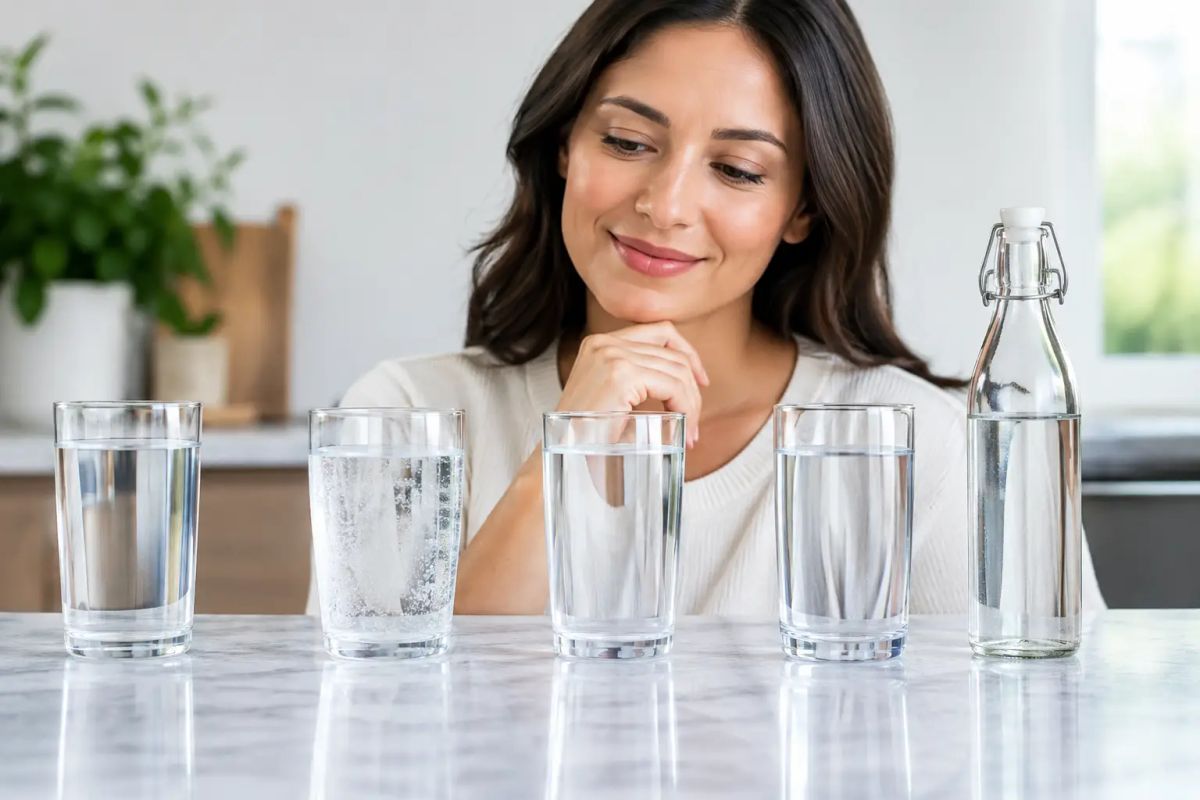
The simplest way to develop your palate is to compare waters side by side. Select three bottles with clearly different profiles: one light, one moderately mineralized, and one sparkling or more mineral-forward. Pour them into identical glasses and taste them without looking at the labels first.
Notice four things: the first impression, the texture across the tongue, the flavor at the finish, and how long that finish lasts. Does the water feel crisp, soft, round, dry, saline, chalky, or lively? Does it vanish quickly or remain present after you swallow? There is no need for elaborate tasting language. Your own precise reaction is the useful part.
Then read the labels. Look for calcium, magnesium, sodium, bicarbonate, pH, TDS, and source origin. Over time, patterns emerge. You may find that you prefer low-mineral waters for daily sipping, or that you reach for higher-mineral sparkling water when eating. You may love a soft bicarbonate-rich profile and dislike a drying magnesium-led finish. Those preferences are worth knowing.
Water Sommelier can make that learning process more immediate. Point your phone camera at a bottle to identify the product and explore details such as mineral composition, pH, TDS, and source origin. It turns a quick choice in a market, restaurant, or hotel minibar into a more informed tasting decision.
The Best Water Is Also Contextual
A water that feels perfect on its own may not be the best companion for every dish. Rich, salty, or fried foods often benefit from sparkling water with assertive bubbles and a clean finish. Delicate cuisine may call for a quieter still water that does not compete with the food. With coffee or tea, a restrained mineral profile may let the beverage's own aromas remain clear.
There is also the matter of mood. A pristine, low-mineral water can feel restorative in its simplicity during a busy afternoon. A richly mineral still water may invite slower attention at dinner. An energetic sparkling water can bring ceremony to an ordinary lunch. The bottle is the same category, but the experience changes with setting.
A Better Question Than “Best”
Rather than searching for one winner, ask: what kind of water do I want right now? Do you want clean and nearly weightless, softly rounded, boldly mineral, or bright with bubbles? Are you drinking it alone or serving it with food? Do you want contrast, or harmony?
There is a world inside every bottle, but it becomes visible only when you pause long enough to taste it. The best water is the one that gives the moment more character and makes you want to take another considered sip.
Scan any bottle. Discover its minerals, origin, and character. Get the Water Sommelier app.