
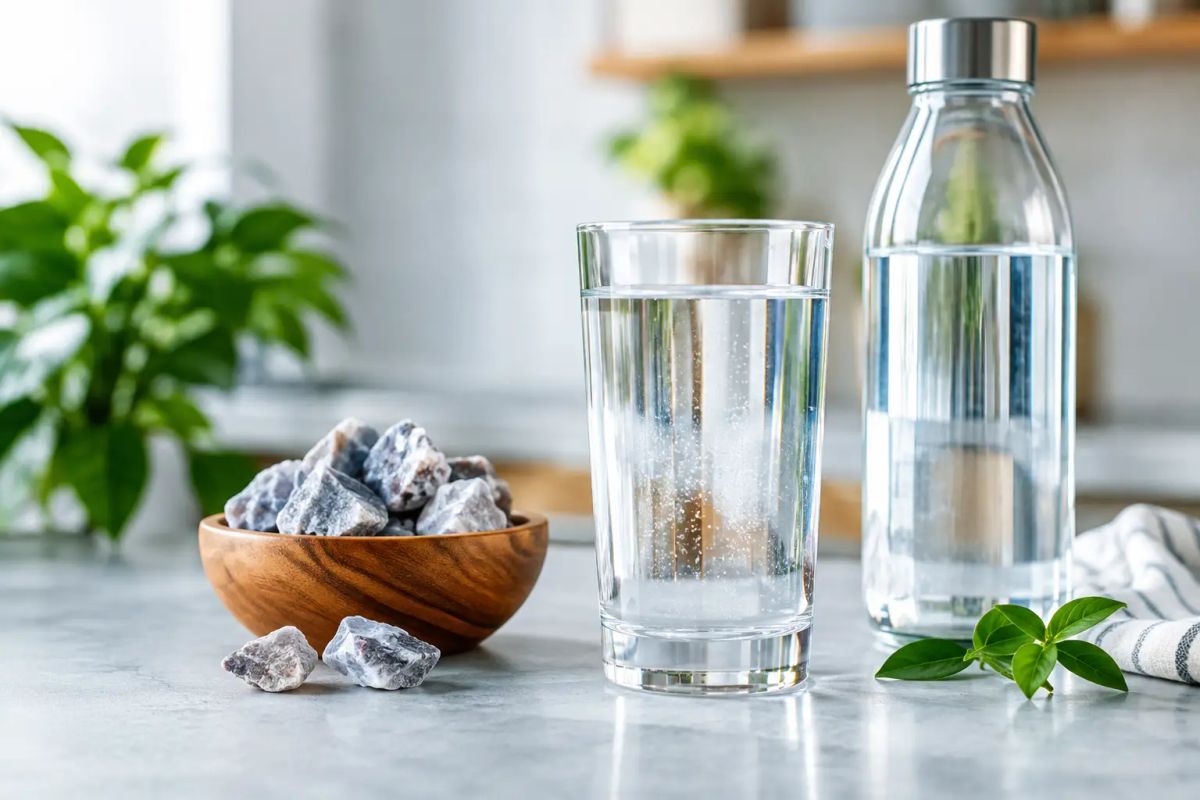
A water label can look like a footnote: a few minerals, a source name, a number beside magnesium. Look again. That number is part of the bottle’s identity. For anyone comparing the best waters for magnesium intake, the useful question is not simply which bottle has the highest figure. It is which water offers a meaningful magnesium level, a profile you enjoy drinking, and a mineral balance that makes sense for the occasion.
There is a world inside every bottle. Magnesium is one part of it, shaping both the water’s composition and, often, its finish on the palate. Learning to read it turns an ordinary purchase into a more informed choice.
What magnesium on a water label actually means
Magnesium is usually listed in milligrams per liter, written as mg/L. This is the concentration of magnesium in one liter of that water, not necessarily the amount in the entire bottle sitting in your hand.
That distinction matters. A 500 mL bottle contains half a liter, so its magnesium contribution is half the listed mg/L figure. A 750 mL bottle contains three-quarters of that amount. For example, water labeled at 40 mg/L magnesium provides about 20 mg in a 500 mL bottle and about 30 mg in a 750 mL bottle.
This is straightforward arithmetic, but it prevents a common comparison error. One bottle may show a larger magnesium number on its analysis panel while another, sold in a larger format, provides more magnesium per bottle. Compare like with like: milligrams per liter for concentration, then bottle volume for what is actually in the serving.
Magnesium may appear under several label formats. Some bottles present a full mineral analysis, while others provide a nutrition-style panel or source report. Look for “magnesium” or the chemical symbol “Mg.” If neither is available, there is no sound basis for calling it magnesium-rich.
Best waters for magnesium intake: look beyond one number
A high magnesium figure is a useful starting point, not a complete verdict. Mineral water is a composition, and magnesium sits alongside calcium, sodium, bicarbonate, sulfate, chloride, and other dissolved minerals. These relationships influence how the water feels and tastes.
A water with moderate magnesium and high bicarbonate can seem rounded, calm, and gently mineral. Magnesium alongside sulfate may read more assertive, with a drier, more structured finish. Calcium can add a firmer, chalkier impression. Sodium may bring softness or a faintly savory quality, depending on its level and the rest of the composition.
For that reason, the best choice depends on what you value. Someone seeking a restrained table water may prefer a moderate-magnesium bottle with low overall mineralization. A drinker who enjoys a more distinctive, terroir-driven profile may choose a water with higher magnesium and a more pronounced mineral signature. Neither is inherently superior. They simply offer different experiences.
The source also matters. Waters drawn from mineral-rich underground formations may acquire their profile through a long interaction with rock and soil. That geological story is not decoration. It helps explain why two waters with similar magnesium levels can taste entirely different.
A practical way to compare bottles
When standing in front of a water shelf or reviewing a bottle at a restaurant, use a consistent sequence. Start with magnesium, then place it in context with the full label.
First, note the magnesium concentration in mg/L. Next, check the bottle size if you want to understand the amount represented by that serving. Then read calcium, sodium, bicarbonate, and sulfate. Finally, look at total dissolved solids, or TDS, as a broad indication of how mineralized the water is overall.
TDS is helpful, but it is not a quality score. Two waters can have the same TDS and taste very different because their dissolved minerals are not the same. One may be calcium-led and creamy; another may be bicarbonate-led and softer; another may have enough magnesium and sulfate to feel vivid and dry. Think of TDS as the frame, not the portrait.
pH deserves similar restraint. It is a measure of acidity or alkalinity, but it does not reveal the complete mineral character of the water. A thoughtful comparison always returns to the mineral analysis and source information.
Use simple ranges as a shopping filter
There is no universal threshold that makes a water “best.” Still, broad ranges can make labels easier to scan. Waters with a very low magnesium figure may have a clean, quiet profile. Those in a moderate range can offer a noticeable mineral presence without dominating the palate. Higher-magnesium waters are often more expressive and may appeal to people who enjoy a clear mineral finish.
The exact experience depends on the rest of the composition. A 25 mg/L magnesium water can taste more distinctive than a 40 mg/L water if its sulfate, bicarbonate, and calcium create a stronger structure. Labels provide facts. Tasting gives those facts a voice.
How magnesium can shape the taste of water
Water is not flavorless. Its flavor is simply quieter than coffee, wine, or tea, which makes texture and finish especially revealing.
Magnesium is often associated with a subtle mineral bitterness or a dry, slightly grippy finish. At modest levels, that quality may feel crisp and refreshing. At higher levels, particularly with sulfate present, it can become more pronounced. Some people find that character elegant and food-friendly; others prefer a softer, rounder profile.
Temperature changes the experience. Very cold water can mute mineral detail, while cool rather than icy water gives the composition more room to show itself. Pour the water into a clean stemmed glass or a simple tumbler, take a small sip, and notice three moments: the first impression, the mid-palate texture, and the finish.
Does the water seem silky, brisk, saline, chalky, or dry? Does the mineral character disappear quickly or linger? These observations are not pretentious. They are practical language for understanding what the label predicts.
Pairing magnesium-forward waters with food
A mineral-forward water can hold its place at the table. The goal is not to make water compete with food, but to choose a profile that supports the meal.
Waters with a firmer magnesium and sulfate character can work beautifully beside rich, savory dishes, where their dry finish offers contrast. A rounded magnesium-bicarbonate water may suit roasted vegetables, grains, mild cheeses, or dishes with a gentle herbal profile. With delicate seafood or simply prepared fruit, a lower-mineral water often keeps the focus on the food.
Sparkling versus still is another decision. Carbonation adds its own tactile energy and can make a mineral profile feel brighter or more angular. Still water tends to present the underlying mineral composition with greater clarity. If you are comparing bottles for magnesium, tasting both styles can sharpen your sense of how texture changes perception.
Read the source, not just the front label
Phrases like “natural,” “spring,” and “mineral” create an atmosphere, but the analytical panel carries the useful detail. A beautiful bottle may signal a particular lifestyle. The mineral composition tells you what is in the glass.
Look for a stated source origin and a current analysis when available. Mineral content can be presented as typical values, and natural variation can occur from source to source and over time. Treat the label as a well-informed snapshot rather than a permanent promise.
This is also why brand loyalty alone can be limiting. If magnesium is your focus, compare the actual figures on the bottles available to you rather than assuming every water from a familiar category will have a similar profile.
Make your next choice more intentional
The most useful habit is to build a small personal reference point. Taste two or three waters with visibly different magnesium levels and write down what you notice. You may discover that you prefer a quiet, low-mineral water for your desk and a more structured, magnesium-forward bottle with dinner.
Water Sommelier makes this label-reading process more immediate: point your phone camera at a bottle to identify the product and view educational details such as magnesium, calcium, sodium, bicarbonate, pH, TDS, and source origin. Point. Shoot. Know.
The best bottle is not the one with the boldest claim. It is the one whose mineral composition you can read, whose character you can recognize, and whose place at your table feels considered.
Scan any bottle. Discover its minerals, origin, and character. Get the Water Sommelier app.