
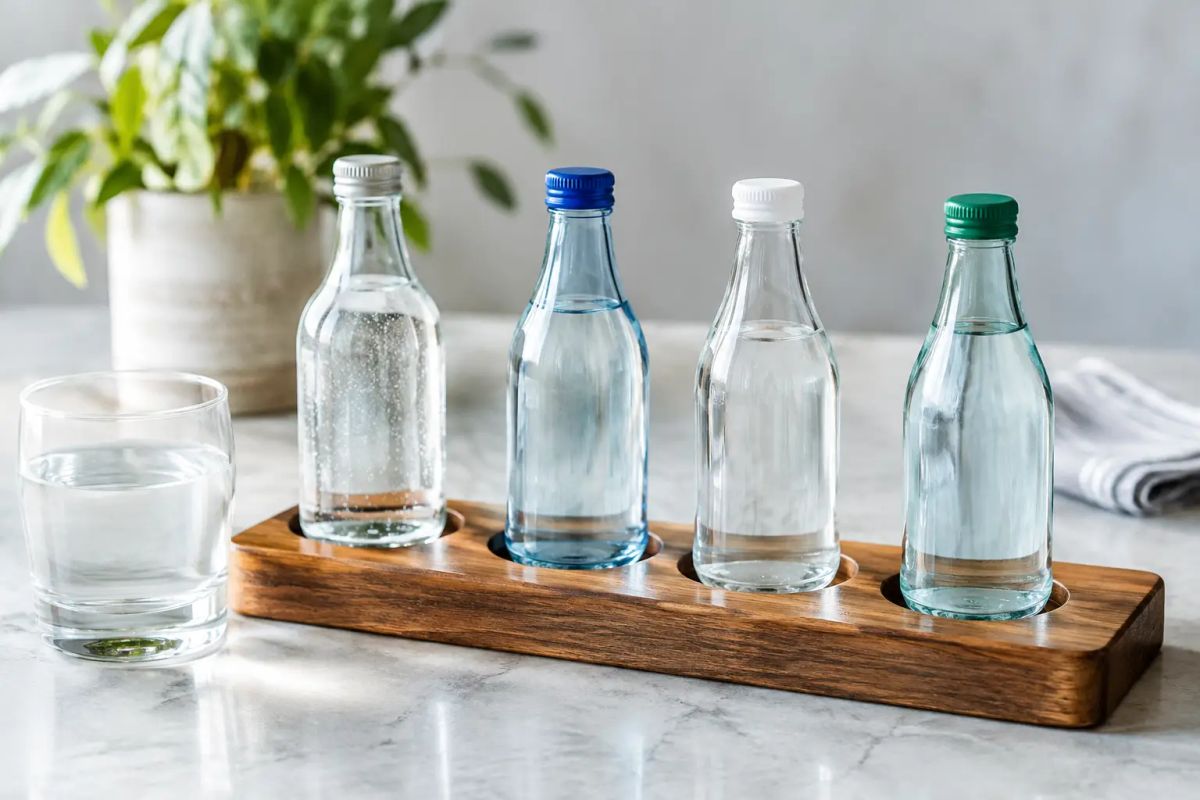
A bottled water flight changes the question from “still or sparkling?” to something far more interesting: what is actually in the glass? Set three bottles side by side and you may find a water that feels soft and quiet beside one with a crisp mineral edge, or a sparkling water whose fine bubbles lift the flavors of a salty snack. There is a world inside every bottle - and a flight gives it room to speak.
This is not about declaring one water objectively superior. It is about learning to recognize source, mineral balance, texture, and finish with the same attention often given to coffee, wine, or tea. A well-built tasting can be elegant enough for a dinner party and simple enough for a curious evening at home.
What a Bottled Water Flight Reveals
A flight is a small, intentional tasting of several waters served in sequence. The contrast is the point. When you drink one bottle in isolation, its character can be difficult to describe. Place it next to another water, however, and differences become clear: one may seem round and silky, another chalky, dry, saline, bright, or gently sweet.
Those impressions have a physical basis. Natural mineral waters carry varying amounts of dissolved minerals, including calcium, magnesium, sodium, and bicarbonate. Total dissolved solids, commonly called TDS, gives a broad sense of how much mineral material is present, though it does not explain the entire flavor experience. Two waters with similar TDS can taste notably different because their mineral balance is different.
Origin matters, too. Water shaped by limestone, volcanic rock, glacier-fed terrain, or a protected spring can arrive with a distinct mineral profile and story. The bottle is not just packaging. It is a record of place.
How to Build a Bottled Water Flight
For a first flight, choose three to five waters. That is enough contrast to make the tasting illuminating without exhausting your palate or crowding the table. Include still water only for your first session, or keep still and sparkling waters as separate flights. Carbonation changes texture and aromatic perception so significantly that it can distract from the quieter distinctions among still waters.
The strongest flights are built around contrast rather than price or label design. You might select a low-mineral still water, a water with a more pronounced calcium and bicarbonate profile, and one with a noticeable level of magnesium or sodium. If you are adding sparkling water, consider comparing a softly sparkling bottle with a more assertively carbonated one.
Set the table simply
Use identical, clear glasses whenever possible. A small white wine glass or clean tumbler works well because it lets you see the water and gives you enough room to swirl gently. Avoid heavily scented dish soap, candles, flowers, or cooking aromas nearby. Water’s subtleties are easily overwhelmed.
Serve still water cool, not ice-cold. Extremely cold water can mute flavor and texture. A brief rest after refrigeration often brings more character forward. For sparkling water, pour shortly before tasting to preserve its bead and energy.
Label the glasses with letters or numbers rather than bottle names if you want a more revealing experience. Taste first, then uncover the identities. Blind tasting is especially useful when familiar packaging might otherwise shape expectations.
Taste in a deliberate order
Begin with the lightest water and move toward greater mineral presence. If you know the labels, use TDS as a rough guide, beginning with lower figures and progressing upward. It is a useful starting point, not a complete ranking system.
Taste still waters before sparkling waters. Within sparkling water, move from gentler carbonation to firmer carbonation. Take a small sip, let it move across your palate, then pause before reaching for the next glass. A plain, neutral cracker can help reset your palate between waters, although short breaks often work just as well.
How to Taste Water With More Precision
You do not need a professional vocabulary to taste attentively. Start with what you genuinely perceive, then look for patterns across the flight. The most useful notes often fall into four simple areas:
- Appearance: Is the water perfectly clear? In sparkling water, are the bubbles fine and persistent or broad and energetic?
- Texture: Does it feel light, creamy, velvety, crisp, weighty, or slightly drying?
- Flavor: Do you notice gentle sweetness, mineral salinity, chalkiness, a stony character, or a clean neutral profile?
- Finish: Does the flavor disappear quickly, stay quietly present, or leave a mineral impression after the sip?
Words such as “soft” and “hard” can be helpful, but keep them sensory rather than judgmental. A soft water may feel delicate and unobtrusive. A more mineral-forward water may feel structured and expressive. The better choice depends on the moment, the food, and your own preference.
After tasting, read each label closely. Look for the source designation and any published mineral analysis. Calcium and magnesium often contribute to perceived body and texture. Bicarbonate can create a rounded, sometimes gently alkaline-tasting impression. Sodium may read as faint salinity, especially when it is more pronounced relative to the other minerals. These are tasting cues, not fixed rules. Temperature, carbonation, and individual perception all matter.
pH is also frequently displayed on water labels and product information. It can be an interesting point of comparison, but it should not be treated as a shortcut to flavor, quality, or personal suitability. A water’s full mineral composition and sensory character tell a more complete story.
Pair Food by Character, Not Status
A bottled water flight becomes especially memorable when it is served alongside a small plate of food. The goal is not to make water compete with the meal. It is to notice how its texture and mineral profile change the experience of a bite.
Delicate still waters tend to sit quietly beside fresh fruit, mild cheeses, lightly dressed greens, and subtle seafood preparations. A water with more mineral weight can feel at home with roasted vegetables, aged cheese, nuts, cured foods, or richer sauces. Sparkling waters can bring a lively contrast to fried appetizers, creamy dishes, and salty snacks.
Still, pairing is personal. A crisp, low-mineral water may be exactly what you want beside a complex meal because it leaves the food in focus. A more expressive mineral water can become part of the conversation when the food is simple. Try both approaches and notice what changes.
Avoid the Details That Flatten the Experience
The most common mistake is serving every bottle straight from an ice-filled cooler. Cold has its place, particularly on a warm day, but a tasting is about discernment. Give the water a little room to reveal itself.
Another mistake is treating high TDS as automatically better. More dissolved minerals can mean more flavor and structure, but subtle water has its own appeal. A low-mineral bottle can be exceptionally graceful, especially when you want a clean, fleeting finish.
Finally, resist turning the flight into a contest of labels. Source stories, packaging, and scarcity can be compelling, but your palate should have the final word. Take notes before looking at the analysis. You may be surprised by which glass you return to.
Make the Ritual Easy to Repeat
Keep a short tasting journal with the bottle name, source, still or sparkling style, published mineral figures, and a few sensory notes. Over time, preferences become more specific. You may find that you enjoy a smooth, calcium-forward water at dinner, a lightly mineral still water in the afternoon, or a fine-bubbled sparkling water with an aperitif.
When a bottle is unfamiliar, Water Sommelier offers a practical starting point: point your phone camera at the label to help identify the product and surface educational details such as mineral composition, pH, TDS, and source origin. Point. Shoot. Know. Then let the glass make the impression.
The best bottled water flight does not need rare bottles, elaborate equipment, or a formal scorecard. It needs attention. Pour slowly, taste without rushing, and let each bottle tell you something about the landscape it came from - and about the kinds of water you enjoy returning to.
Scan any bottle. Discover its minerals, origin, and character. Get the Water Sommelier app.