
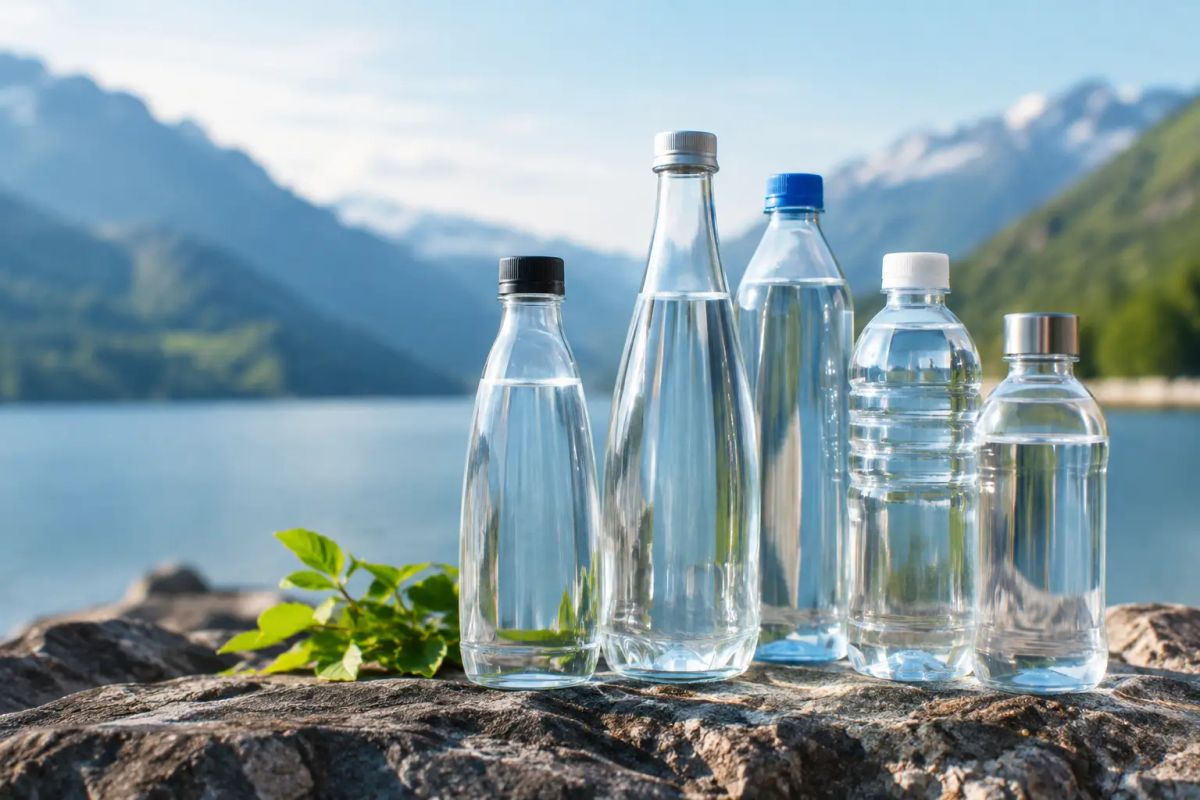
A bottle can look perfectly clear and still carry a distinct sense of place. This bottled water origin guide is about learning to read that place: the geology beneath the source, the path water takes to the surface, and the choices made before it reaches the table. Origin is not simply a romantic line on a label. It is context for the minerals, texture, and sensory character in your glass.
For anyone who treats water with the same curiosity they bring to coffee, wine, or olive oil, source matters. It gives a bottle a story. More usefully, it gives you a starting point for understanding what the numbers and language on the label may mean.
Why Origin Changes the Experience
Water begins as part of a larger landscape. Rain and snow move through rock, soil, and underground formations. Along the way, water may dissolve small amounts of naturally occurring minerals. The exact result depends on time, temperature, depth, and geology.
A water that has traveled through limestone may carry a different mineral profile from one emerging from volcanic rock. One can feel soft and rounded on the palate; another may seem structured, crisp, or lightly saline. These are tasting descriptions, not guarantees. Bottling practices, treatment, carbonation, and the specific source itself all shape the final experience.
This is why two bottles labeled as spring water can taste noticeably different. “Spring” describes a category and a route to the surface. It does not tell the complete mineral story.
The Main Source Terms on a Bottle
The front label is designed to catch the eye. The finer detail is often on the side or back. Start by identifying the source designation, then look for a named spring, well, aquifer, or geographic location.
Spring Water
Spring water comes from an underground formation and flows naturally to the surface at a spring. It may also be collected through a borehole that taps the underground formation feeding the spring, provided the collection meets the applicable standards for the category.
This designation often appeals because it suggests a direct connection to a natural source. Still, it is worth reading beyond the word “spring.” Is a particular spring named? Is the source location stated? Does the bottle provide a mineral analysis? A specific source and a transparent composition tell a fuller story than broad imagery of mountains alone.
In sensory terms, spring waters can range widely. Some are delicate and low in dissolved minerals. Others carry more calcium, magnesium, or bicarbonate and present a firmer, more lingering palate.
Mineral Water
Natural mineral water generally comes from a protected underground source and contains minerals and trace elements occurring naturally at the source. In the United States, the category has a specific regulatory meaning: it must contain at least 250 parts per million total dissolved solids, or TDS, from the source.
That threshold is useful, but it is not a scorecard. Higher TDS means more dissolved material, not automatically a better bottle. A mineral water with significant bicarbonate may taste broad and velvety. One with more sodium and chloride may read as savory or saline. Another may be notably calcium-forward, with a chalky or structured impression.
For the table, mineral water is often the most expressive category because its composition is central to its identity. Think of it as water with an audible accent.
Artesian Water
Artesian water comes from a confined aquifer, an underground layer of water-bearing rock or sediment held under pressure. When tapped by a well, the pressure can cause the water level to rise above the top of the aquifer. In some cases, it may reach the surface without pumping.
The word sounds luxurious, and it can describe a fascinating geological setting. But artesian does not by itself tell you whether a water is high or low in minerals, or whether it will taste light, creamy, or vivid. The composition panel remains the better guide to what is actually in the bottle.
Purified Water
Purified water has been treated by processes such as reverse osmosis, distillation, deionization, or another suitable method to meet purity standards. Its origin can begin with a public water supply or another source, but its identity in the bottle is primarily defined by purification rather than a distinctive underground spring or aquifer.
This does not make purified water inferior. It simply represents a different proposition. Purified water often has a clean, neutral profile, particularly when its dissolved-mineral content is low. Some products may add minerals after purification for flavor or consistency, so the label is still worth reading closely.
Sparkling Water and Source
“Sparkling” tells you about carbonation, not origin. A sparkling water may be spring, mineral, artesian, or purified. Its bubbles may be naturally occurring, captured from the source, or added during bottling. Those details influence texture and aroma perception, while the underlying mineral composition continues to shape the finish.
How to Read Origin Without Falling for Packaging
A photograph of an alpine peak or a forested valley is not the same as source information. Look for concrete language: a named source, a city or region, an aquifer, a spring designation, or a bottling location. The more precise the disclosure, the easier it is to understand the bottle on its own terms.
Then separate three ideas that are often blended together on packaging: source, treatment, and bottling. A water can originate from an underground source, receive permitted treatment, and be bottled somewhere nearby or elsewhere. Each detail matters, but they are not interchangeable.
The source tells you where the water begins. Treatment tells you what may have happened before bottling. The bottler tells you who placed it on the shelf. When a label makes only one of these clear, keep your assumptions modest.
Pair Origin With the Mineral Panel
Origin becomes much more useful when you read it beside the composition. Four measurements offer an elegant first impression: calcium, magnesium, sodium, and bicarbonate. Together, they help explain why a water may feel gentle, crisp, savory, or substantial.
Calcium can contribute structure. Magnesium can add a subtle mineral edge, sometimes perceived as dry or faintly bitter at higher levels. Sodium may create a soft or saline impression. Bicarbonate often supports a rounder, more buffered character. No single mineral defines a water. The balance is what matters.
TDS adds a broad view of the total amount of dissolved material. Low-TDS waters often feel light and quiet; higher-TDS waters can feel more present and persistent. But two waters with similar TDS can taste very different because the mix of minerals is different.
pH is another familiar number, though it is frequently overinterpreted. It measures acidity or alkalinity under a particular set of conditions. It can be interesting context, especially when comparing labels, but it cannot replace source information or a full mineral profile.
A Better Way to Taste Origin
Taste two waters side by side at a cool, not ice-cold temperature. Use identical clean glasses. Take a small sip, let it move across your palate, and notice the opening, mid-palate, and finish.
Ask simple questions. Does it arrive quietly or with immediate mineral presence? Does the texture feel silky, crisp, creamy, or weighty? Is there a saline note? Does the finish disappear quickly or remain with a chalky, stony, or gently sparkling impression?
Food makes these differences even easier to notice. A light, low-mineral still water can sit gracefully beside delicate raw seafood or fresh fruit. A more mineral-forward sparkling water may hold its own alongside rich cheeses, cured meats, or dishes with pronounced salt and fat. There are no absolute rules, only thoughtful contrasts and complements.
Put a Bottle’s Story in Focus
Labels can be dense, and details are easy to miss in a restaurant, airport, or grocery aisle. Water Sommelier offers a practical way to bring the information together: point your phone camera at a bottle to help identify the product and surface educational details about source origin, mineral composition, pH, and TDS. Point. Shoot. Know.
The goal is not to turn every bottle into a test. It is to make an everyday choice more legible. Once you recognize the difference between a spring, an artesian source, a mineral water, and a purified water, the shelf starts to look less uniform.
The next time a bottle catches your attention, pause before the first sip. Read where it comes from, notice what it carries, and let its landscape introduce itself.
Scan any bottle. Discover its minerals, origin, and character. Get the Water Sommelier app.